
NZ Asbestos Plan: Don't Get Caught! The 5-Year Rule & Hidden Triggers You MUST Know
How Often Should an Asbestos Management Plan Be Reviewed in NZ?
Key Takeaways
- New Zealand law requires a formal review of your asbestos management plan at least every five years.
- Specific trigger events, such as asbestos removal or building damage, necessitate an immediate update to the plan.
- An asbestos management plan is a living document that must accurately reflect the current state of the building.
- Regular re-inspections provide the data needed to keep your asbestos register and management plan compliant.
Managing a commercial property or a large-scale residential development comes with a long list of health and safety obligations. For those looking after buildings constructed or refurbished before 2000, asbestos management sits at the top of that list. We often find that property owners view the creation of an Asbestos Management Plan (AMP) as a one-time task. However, the reality of compliance in New Zealand is different.
An asbestos management plan functions as a living document. It requires regular attention to ensure it remains an effective tool for protecting workers, tenants, and contractors. Failing to keep this document current creates significant legal risks and, more importantly, physical risks to anyone entering your site. Understanding the timing and triggers for a review is essential for any PCBU (Person Conducting a Business or Undertaking).
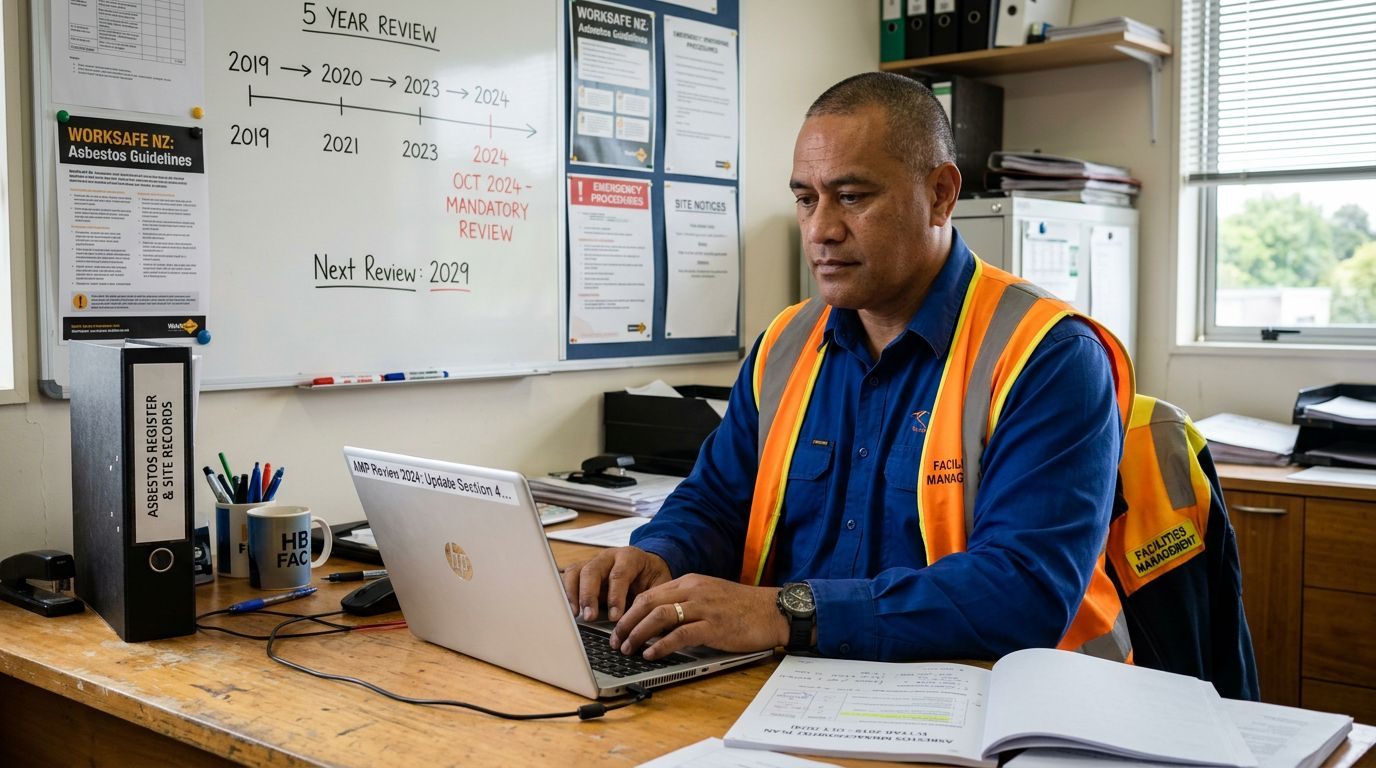
The Five-Year Mandatory Review Cycle
The Health and Safety at Work (Asbestos) Regulations 2016 provide a clear baseline for compliance. WorkSafe guidance indicates that an asbestos management plan must be reviewed at least every five years. This is the absolute maximum interval allowed under the law. Even if no changes occur within the building, a formal review ensures the plan still meets current regulatory standards and that the contact details, roles, and responsibilities listed remain accurate.
For many stable environments, such as a low-risk office block in Palmerston North with encapsulated asbestos, this five-year cycle is the standard operating procedure. We recommend documenting the date of each review clearly within the plan to provide a paper trail for WorkSafe inspectors. You can find more detail on the mandatory components of these documents on our page regarding asbestos management plans.
Immediate Triggers for an AMP Review
While the five-year rule is the baseline, several specific events require an immediate review and update of your plan. These triggers relate to any change that affects the risk profile of the asbestos on-site. If the information in your plan no longer reflects the reality of the building, the plan is legally insufficient.
Key trigger events include:
- The removal, sealing, or enclosure of any asbestos-containing materials (ACMs).
- Damage or deterioration of known ACMs caused by wear, water leaks, or impact.
- Planned renovations, refurbishments, or demolition work.
- Severe weather events, such as storms or earthquakes, that may have disturbed the building fabric.
- The discovery of new ACMs in areas previously thought to be clear.
- A formal request for a review from a health and safety representative or a worker.
Take a factory manager in Napier, for example. If they decide to install new machinery that requires drilling into older walls, they must review the AMP before work begins. This ensures the contractors have the most recent information and that the control measures in place are still effective. This often involves commissioning asbestos demolition and refurbishment surveys to identify hidden risks before the first hammer swings.
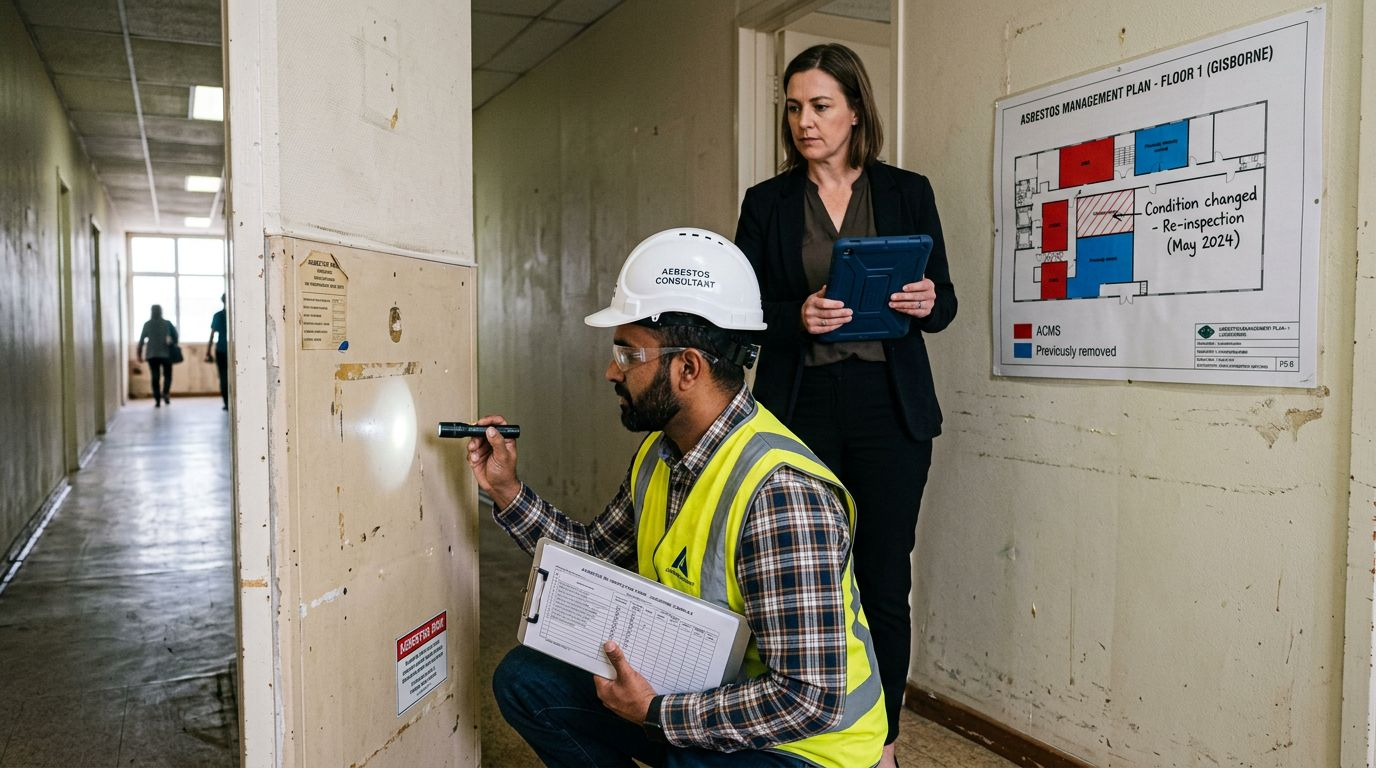
The Connection Between Re-inspections and Your Plan
A management plan is only as good as the data it contains. This data primarily comes from your asbestos register, which lists the location and condition of all known or assumed asbestos. WorkSafe recommends that these materials undergo regular re-inspections to check for signs of damage or aging. While the plan itself has a five-year review limit, higher-risk sites often require more frequent physical inspections.
A school in Gisborne or a busy retail complex in Hastings might opt for annual or biennial re-inspections due to the high volume of foot traffic and the potential for accidental damage. When a re-inspection identifies that a material's condition has changed, we update the register immediately. This change then triggers a review of the management plan to ensure the "control measures" (how you manage that risk) are still appropriate. Regular asbestos re-inspections are the most reliable way to feed accurate information into your compliance framework.
Why Independent Advice Protects Your Business
Maintaining compliance requires an objective eye. We believe in providing 100% independent advice because it eliminates any conflict of interest. When a consultancy is separate from the companies performing the removal work, you receive an unbiased assessment of your building's needs. Our focus remains solely on keeping your people safe and your business compliant with New Zealand law.
Whether you are managing a warehouse in Taupō or a law firm in Lower Hutt, the goal is the same: a streamlined, practical document that people actually use. We provide plain-English reports and templates that take the guesswork out of the review process. If you are unsure when your last review took place, or if you have recently discovered new materials through asbestos testing, now is the time to act.
Practical Steps for Property Managers
To ensure you never miss a compliance deadline, we suggest treating your AMP as a standard part of your annual health and safety audit. Check the condition of your ACMs, verify that your contractor induction process includes a briefing on the asbestos register, and confirm that no unauthorised work has taken place. If your building was built before 2000, you have a duty to keep this information up to date.
Asbestos remains the leading cause of workplace-related deaths in New Zealand, with approximately 220 people dying each year from past exposures. Keeping your management plan current is a vital part of reducing these statistics for the future. For those starting from scratch or looking to overhaul an outdated system, our asbestos guides and templates offer a compliant starting point for NZ businesses.
For more specific questions about your obligations as a landlord or building owner, our asbestos management FAQs provide further clarity on the regulations and how they apply to your specific situation.