
Asbestos Register vs. Management Plan: The NZ Compliance Guide You Can't Ignore
Asbestos Register vs Asbestos Management Plan: What is the Difference?
Key Takeaways
- An asbestos register is a factual record listing the location, type, and condition of all asbestos in a building.
- An asbestos management plan is a strategic document outlining how those risks are controlled and monitored over time.
- New Zealand law requires both documents for most workplaces and commercial properties built before 2000.
- Management plans must be reviewed at least every five years or whenever the asbestos condition changes.
- A register alone is insufficient for WorkSafe compliance; you must have a written plan to manage the identified risks.
We often meet property owners in Napier and Hastings who have a professional asbestos survey sitting in a drawer. They believe that because they have identified the asbestos, they have ticked the compliance box. While having that information is a vital first step, New Zealand’s Health and Safety at Work (Asbestos) Regulations 2016 require more than just identification. You must also have a clear strategy for managing those materials.
Understanding the distinction between an asbestos register and an asbestos management plan (AMP) is essential for any Person Conducting a Business or Undertaking (PCBU). Whether you manage a factory in Palmerston North or a retail block in Gisborne, these two documents work together to keep your people safe and your business compliant.
The Asbestos Register: The Factual Foundation
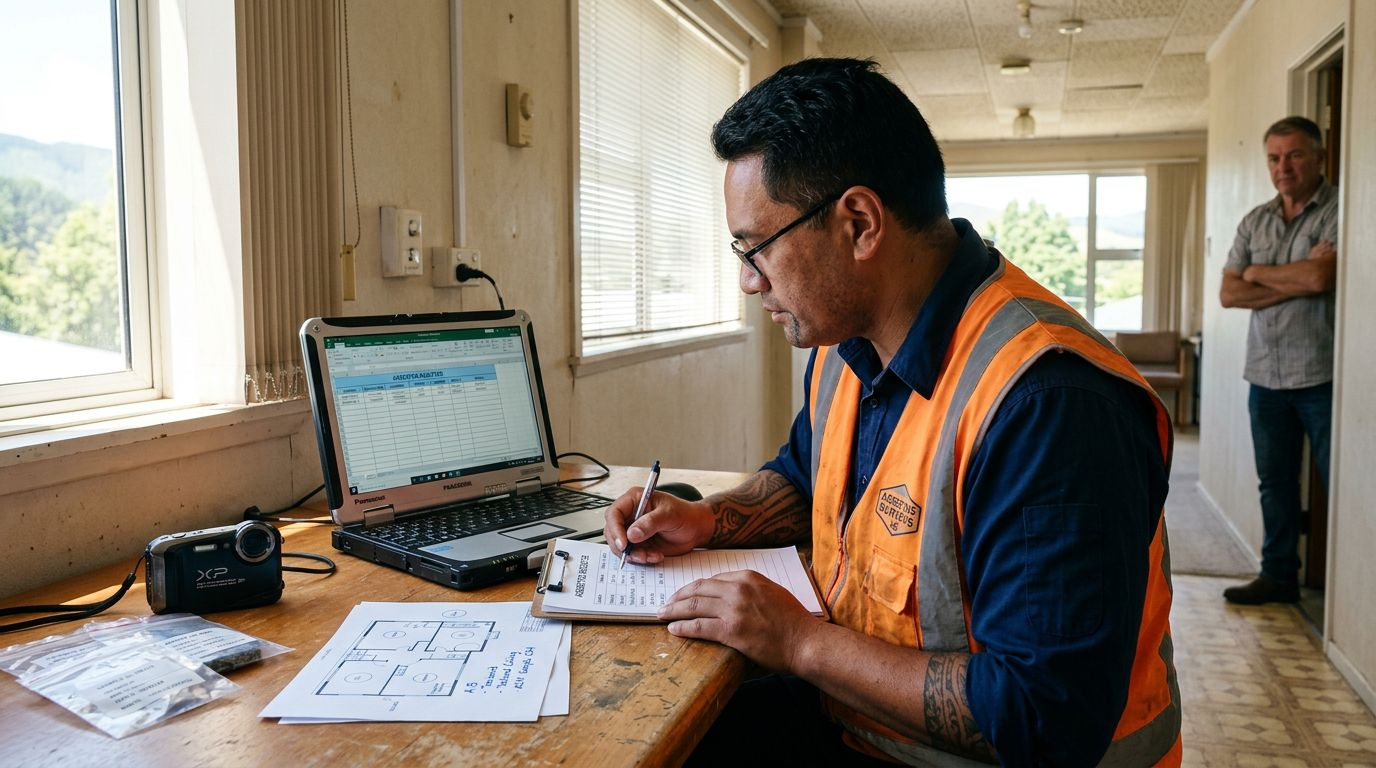
The asbestos register serves as the master list of every known or presumed asbestos-containing material (ACM) within a structure. It is a data-driven document typically created following an asbestos management survey. According to WorkSafe, a compliant register must include specific details for each item found.
A standard register includes the date of identification, the exact location of the material, the type of asbestos, and its current condition. It also records the quantity of the material and notes any areas that were inaccessible during the survey. If samples were taken, the laboratory results are linked to the register to provide definitive proof of the hazard.
For more information on how we identify these materials, you can view our services for asbestos testing across the North Island.
The Asbestos Management Plan: The Strategic Action
The asbestos management plan is the "live" part of your compliance. It takes the data from the register and explains exactly how you will manage those risks on a day-to-day basis. If the register tells you what is there, the management plan tells you what you are going to do about it.
A compliant management plan includes your decisions regarding the asbestos, such as whether you will encapsulate it, label it, or eventually remove it. It outlines procedures for incidents or emergencies, such as a pipe bursting behind an asbestos-lined wall. It also details who is responsible for the asbestos, what training staff have received, and the schedule for health monitoring and periodic re-inspections.
We provide comprehensive support for creating these documents. You can learn more about our approach to building these strategies on our dedicated page for asbestos management plans.
PCBU Duties and Legal Requirements
Under the 2016 regulations, the responsibility falls on the PCBU. This includes commercial landlords, business owners, school boards, and even some residential property managers. If a workplace was built before 1 January 2000, the law assumes asbestos is present unless proven otherwise. In these cases, the PCBU has a legal duty to identify the material and maintain an up-to-date register.
The requirement for a management plan is equally strict. You must have a written plan for any structure where asbestos is present or likely to be present. This includes asbestos found in soil or naturally occurring asbestos. WorkSafe requires that this plan remains readily accessible to any workers or contractors who may carry out work that could disturb the materials. Failure to provide this information puts workers at risk and leaves the PCBU liable for significant penalties.
How the Documents Work Together in Practice
The relationship between the register and the plan is best understood through local examples. These scenarios illustrate how data transforms into action.
Consider a commercial office in Napier. The register might list asbestos-containing vinyl flooring in the breakroom and textured ceilings in the lobby. The management plan then dictates that the vinyl must be inspected every twelve months for wear and that no contractors are permitted to drill into the lobby ceiling without a specific work permit and safety briefing.
In a school in Hastings, the register identifies asbestos eaves and wall linings. The management plan sets out a policy that prevents staff from pinning posters to certain walls and schedules a staged removal of the eaves during the summer holidays to minimise risk to students.
For a factory in Palmerston North, the register logs pipe lagging in the boiler room. The management plan outlines the air monitoring requirements during routine maintenance and provides a clear notification process for the external contractors who service the machinery.
You can find practical tools and templates to help organise these requirements on our guides and templates page.
The "Register Only" Misconception
A common mistake we see among property owners in the Tararua and Taupō regions is the belief that a survey report is the same thing as a management plan. A survey report contains a register, but it does not contain the bespoke management procedures required by law. Relying solely on a register leaves a massive gap in your safety protocols.
Without a management plan, you lack agreed control measures and emergency procedures. You have no formal communication plan for contractors and no set schedule for reviewing the condition of the asbestos. Compliance requires you to actively manage the risk, which is only possible through a documented plan that is reviewed and updated regularly.
Ongoing Compliance and Re-inspections
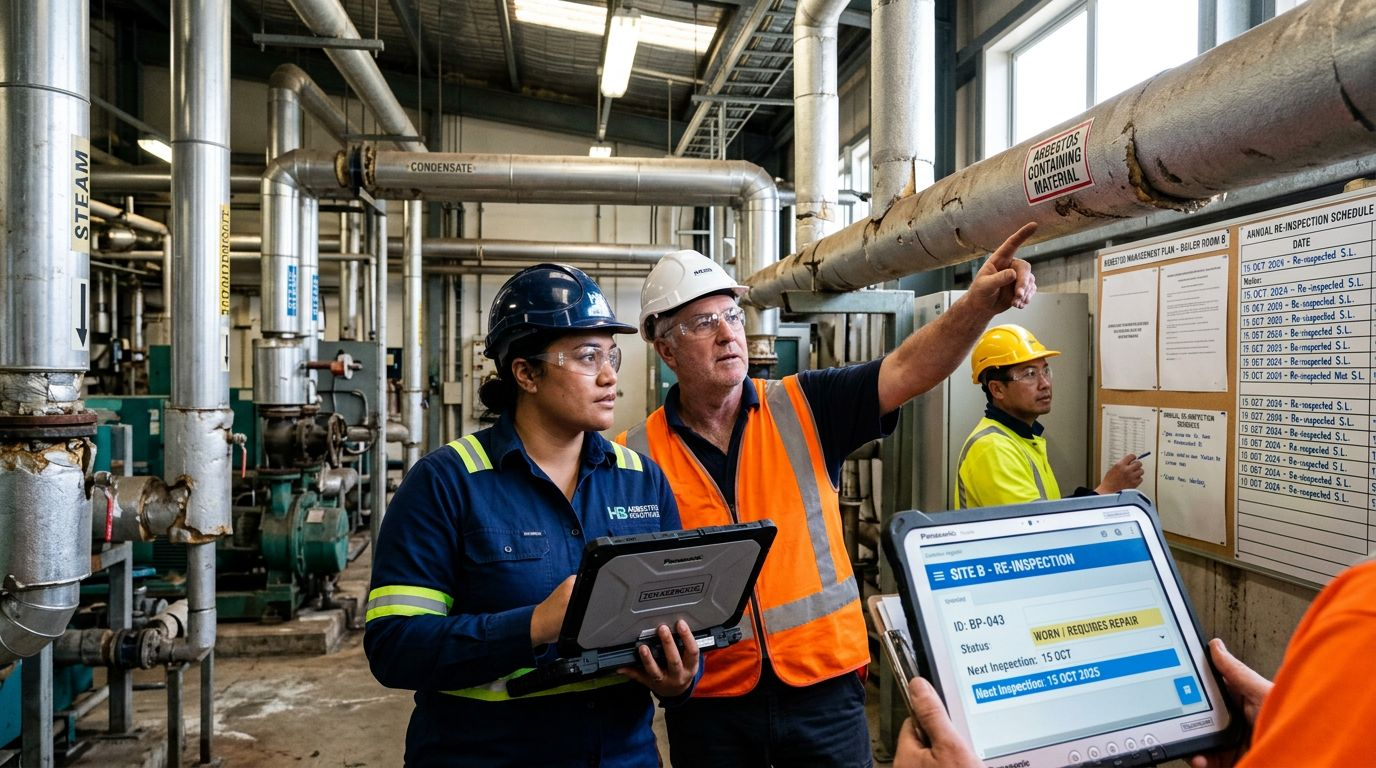
Both the asbestos register and the management plan are living documents. They must be updated whenever asbestos is removed, disturbed, or enclosed. Even if no work is done, WorkSafe dictates that the management plan must be reviewed at least every five years. However, many high-traffic sites require more frequent checks.
Regular re-inspections are the best way to keep your register accurate. A professional consultant visits the site to visually assess the condition of known ACMs. If a material has started to degrade or has been damaged, the register is updated, and the management plan is adjusted to address the new level of risk.
We offer specialised services to help you stay on top of these cycles. Learn more about our process for asbestos re-inspections to ensure your site remains safe.
When You Need a Different Type of Survey
It is important to recognise that a standard management register is designed for normal building occupancy. If you are planning a renovation or demolition in a pre-2000 building, you need a more intrusive investigation. These project-specific surveys look behind walls and under floors to find hidden asbestos that a standard management survey might miss.
For those planning major works in Hawke’s Bay or Gisborne, our guide on demolition and refurbishment surveys explains these requirements in detail.
The Importance of Independent Advice
When managing asbestos, clear and unbiased information is your greatest asset. We maintain total independence from removal contractors. This ensures that our registers and management plans are based purely on safety and compliance requirements rather than a desire to generate removal work. This "straight up" approach gives property owners the confidence that they are doing exactly what is necessary to protect their people without unnecessary expense.
If you have further questions about your specific obligations, our asbestos management FAQs provide answers to the most common queries we receive from NZ businesses.
Managing asbestos is a continuous responsibility. By maintaining both a detailed register and a proactive management plan, you ensure that your business meets its legal duties while providing a safe environment for everyone on site.