
Hawke's Bay Renovation Revamp: Decode Asbestos Risks Before You Demolish!
Renovating a Hawke's Bay Property? A Guide to Asbestos Testing Before You Start
Key Takeaways
- Properties built or refurbished before 2000 likely contain asbestos materials.
- Legal regulations require PCBUs to identify asbestos before starting refurbishment or demolition.
- A Refurbishment (R&D) Survey is more intrusive and thorough than a standard management check.
- Independent testing ensures no conflict of interest between the surveyor and the removalist.
- Providing the survey report to all contractors is a mandatory safety step.
Planning a renovation project in Hawke's Bay brings a unique set of challenges, particularly when dealing with our region's diverse housing stock. Whether you are updating a classic villa on Napier Hill or a 1970s brick home in Hastings, the presence of asbestos is a reality that requires careful management. We see many property owners eager to start swinging hammers, but the first step must always be a clear understanding of what lies behind the walls.
Asbestos remains a significant health risk in New Zealand. According to WorkSafe, asbestos contributes to approximately 220 deaths every year, making it one of the country's leading occupational killers. While asbestos materials are often safe when left undisturbed, the acts of sanding, drilling, or pulling down linings during a renovation release dangerous fibres into the air. Professional asbestos testing in Hawke’s Bay provides the certainty needed to keep your family and your tradespeople safe.
The Legal Reality for Hawke's Bay Renovators
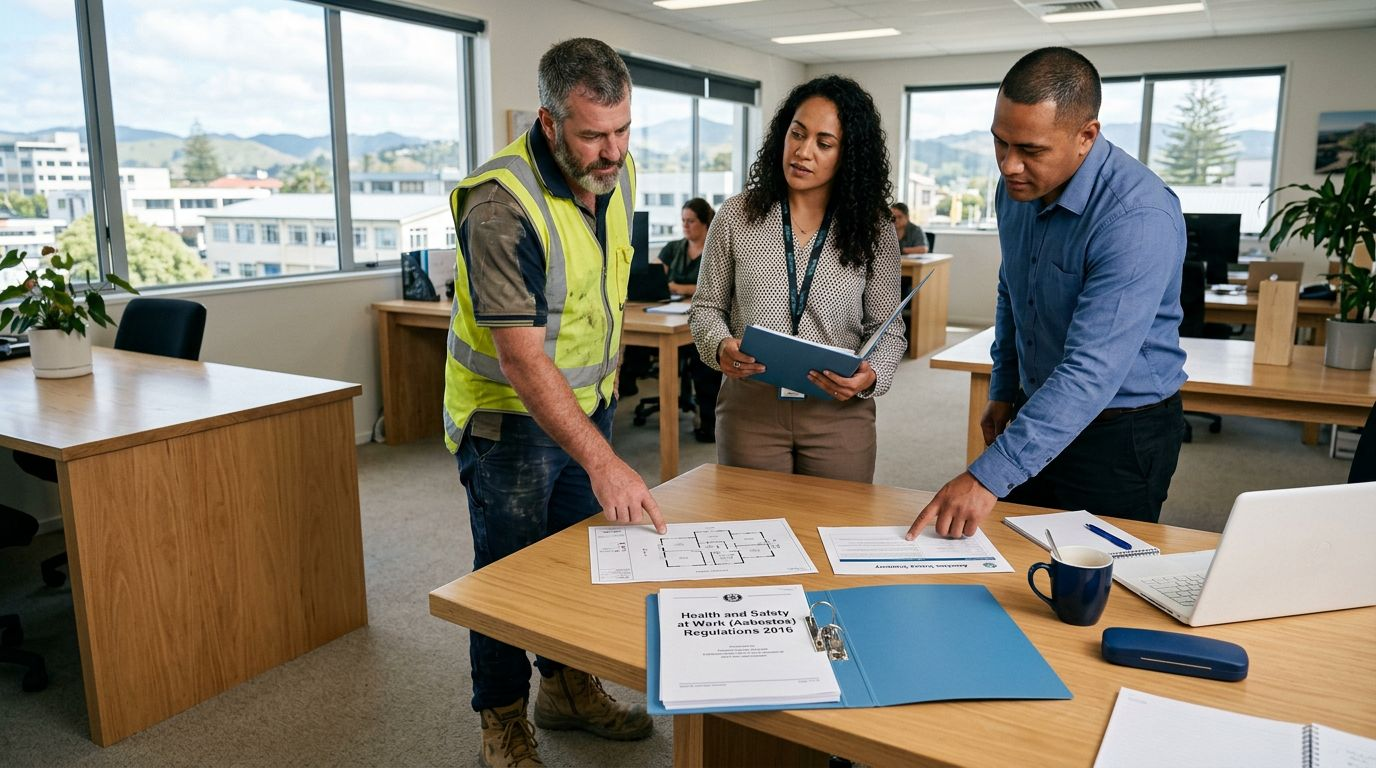
The Health and Safety at Work (Asbestos) Regulations 2016 set out clear expectations for property owners and businesses. If you are a landlord, a business owner, or a homeowner engaging contractors, you often fall under the category of a PCBU (Person Conducting a Business or Undertaking). The law requires PCBUs to identify any asbestos likely to be disturbed before refurbishment or demolition begins.
The "pre-2000 rule" is the standard benchmark in New Zealand. Any building constructed or refurbished before 1 January 2000 is presumed to contain asbestos until testing proves otherwise. This is particularly relevant in areas like Havelock North and Central Hawke's Bay, where many homes feature textured ceilings, fibre-cement soffits, or older vinyl flooring. Following a safety and legal guide for renovations ensures you meet these obligations without facing costly stop-work notices later.
Testing vs. Surveys: Choosing the Right Level of Detail
We often get asked if a single sample is enough to clear a whole house. The answer depends entirely on the scope of your project. Simple asbestos testing involves taking a sample of a specific material, such as a piece of lino or a scrap of ceiling plaster, and sending it to an IANZ-accredited laboratory for analysis. This works well for very localised repairs, like replacing a single wall in a laundry.
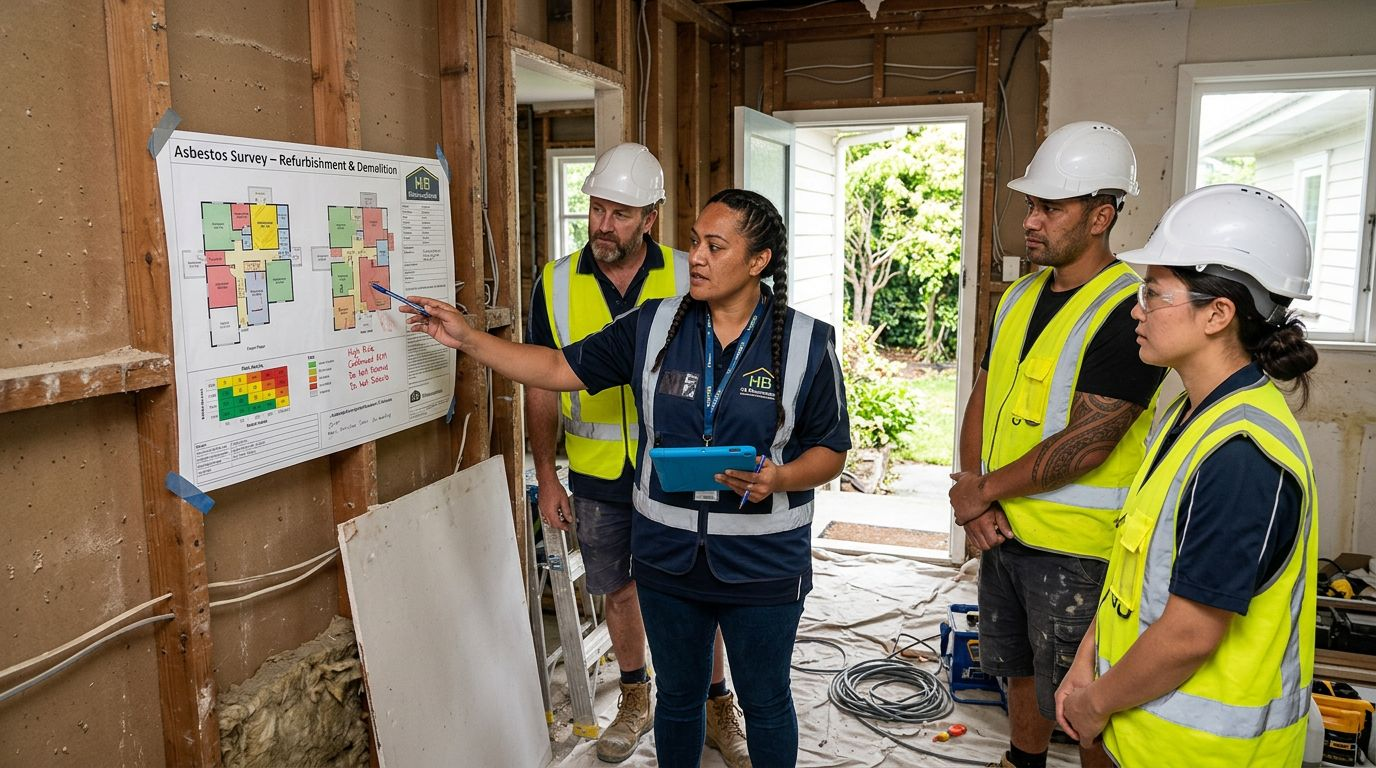
Most renovations require a more comprehensive approach. An Asbestos Demolition & Refurbishment Survey is a targeted, intrusive inspection. Unlike a standard management survey used for daily building occupancy, an R&D survey involves looking behind linings, under floor layers, and inside ceiling voids. Its purpose is to find every hidden fragment of asbestos that your renovation might disturb. This thoroughness is the only way to provide a "clear" status for your builders to proceed.
The Four-Step Pathway to a Safe Renovation
Managing asbestos does not have to be a source of stress. We recommend following a structured process to keep your project on track and your site compliant.
1\. Engage an Independent Professional
Your first step is to book a refurbishment survey with a qualified consultant. We believe independence is vital. By choosing a consultancy that does not perform removal work, you receive an unbiased report focused solely on your safety and compliance. Our surveyors hold BOHS qualifications and use IANZ-accredited labs to ensure every result is legally defensible and accurate. Whether you are in Wairoa or Waipukurau, having a local expert who understands regional building styles makes the process much faster.
2\. Understand Your Survey Report
Once the inspection and lab work are complete, you will receive a detailed report. We provide these in plain English so you can make informed decisions. The report will include a register of all identified asbestos, its condition, and its "friability" (how easily it crumbles). You will see clear recommendations on whether materials need to be removed, encapsulated, or can be safely managed in place. If access was restricted to a certain area, the report will list it as "presumed asbestos," meaning you must treat it as hazardous until it can be safely accessed and tested.
3\. Factor in Removal Costs and Timelines
Finding asbestos may require you to adjust your budget and schedule. Professional removal involves licensed Class A or Class B contractors, specialised equipment, and often air monitoring to ensure the environment remains safe. While we do not perform the removal ourselves, our independent reports allow you to get competitive, accurate quotes from removalists. Factoring in these costs early prevents the "nasty surprise" of a project stalling halfway through because a builder refused to touch a suspect material.
4\. Communicate with Your Contractors
The law is very clear: everyone on site must be aware of the asbestos risks. You must provide your survey report to every builder, plumber, and electrician before they start work. This allows them to plan safe work methods and ensures they are not accidentally exposed to fibres. We suggest including the report in your tender documents and making it a central part of your site's health and safety induction. This demonstrates due diligence and protects the health of everyone involved in the project.
Independence and Peace of Mind
Our role is to provide the clarity you need to renovate with confidence. By specialising in testing and surveying rather than removal, we offer a transparent service that puts your interests first. We understand the Hawke's Bay landscape and the expectations of local councils. Taking the time to identify asbestos before you start work is the most effective way to ensure your renovation is a success, rather than a health hazard.