
Renovating in NZ? Uncover Asbestos: Your Safety & Legal Guide for Pre-2000s Homes
Do I Need Asbestos Testing Before Renovating In NZ?
Key Takeaways
- Buildings constructed or refurbished before 1 January 2000 likely contain asbestos materials.
- The Health and Safety at Work (Asbestos) Regulations 2016 require PCBUs to identify asbestos before starting refurbishment or demolition.
- Refurbishment and demolition surveys are more intrusive than standard management surveys and are necessary for identifying hidden risks.
- Independent asbestos consultants provide unbiased results by maintaining no financial interest in the removal process.
Renovating a property is an exciting milestone, whether you are refreshing a family home in Napier or upgrading a commercial office in Gisborne. However, the age of New Zealand’s building stock means that many projects carry a hidden risk. Asbestos remains one of the largest occupational killers in the country, with WorkSafe NZ reporting approximately 220 asbestos-related deaths every year. If your building was constructed or altered before 1 January 2000, professional asbestos testing is a critical first step for your project.
For more information on the specific types of inspections available, visit our page on Asbestos Surveying & Experts in Hawke's Bay, Gisborne, Manawatu and Taupo.
The Pre-2000 Rule and Your Legal Obligations
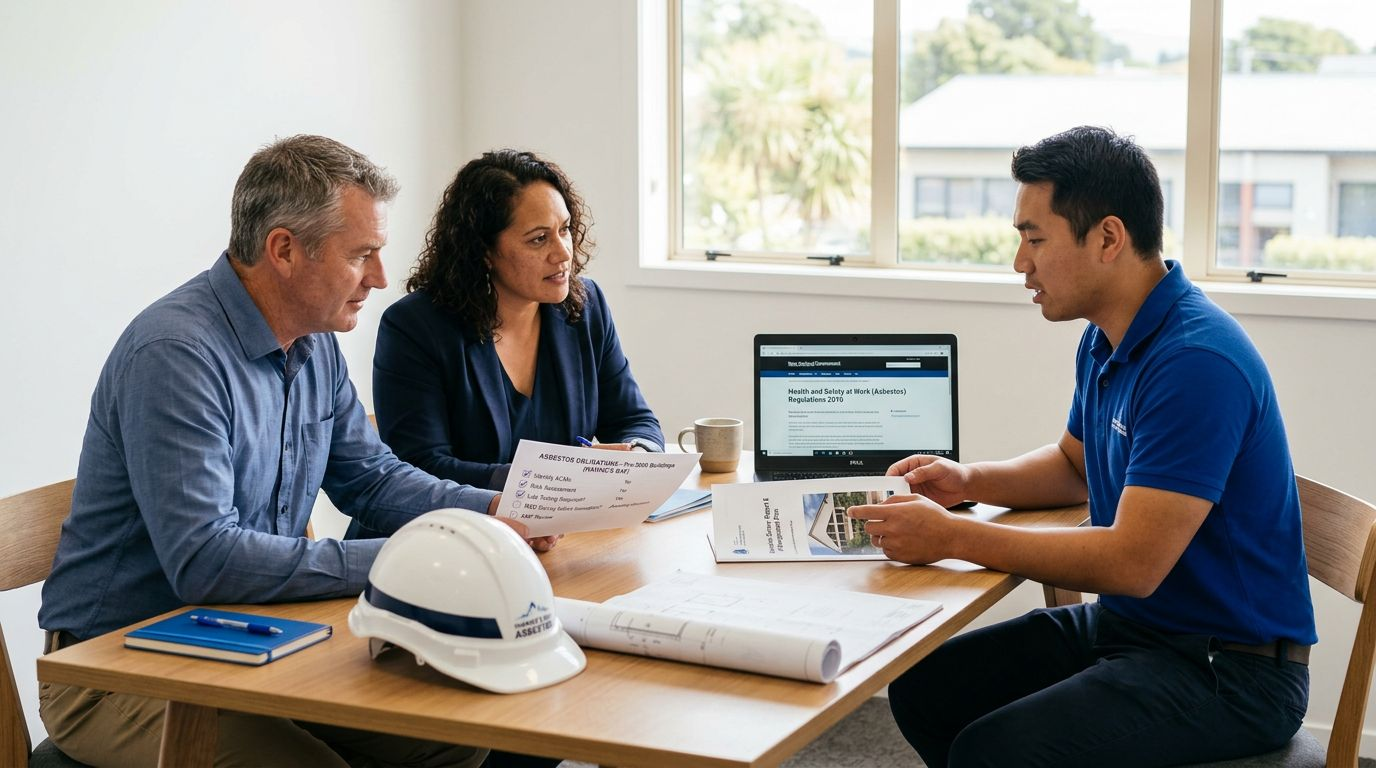
New Zealand law is very clear regarding older structures. Any building built before the year 2000 is likely to contain asbestos-containing materials (ACMs). Under the Health and Safety at Work (Asbestos) Regulations 2016, anyone who is a Person Conducting a Business or Undertaking (PCBU) has specific legal duties. This includes commercial property owners, residential landlords, and tradespeople.
A PCBU must ensure that all asbestos likely to be disturbed during a renovation is identified before the work begins. If there is any uncertainty about whether a material contains asbestos, the law requires you to assume it is present until proven otherwise by an accredited laboratory. This "stop and check" approach prevents accidental exposure and ensures you remain compliant with WorkSafe expectations.
You can find more detailed answers to common questions on our Asbestos FAQs page.
Common Asbestos Locations in NZ Properties
Asbestos was a popular building material because of its durability and fire resistance. While it remains safe when in good condition and left undisturbed, the acts of sanding, drilling, or cutting during a renovation release respirable fibres into the air. These fibres cause incurable diseases like mesothelioma and lung cancer decades after exposure. Common areas where we find ACMs include:
- Textured ceilings (often called "popcorn" or Glamatex ceilings).
- Vinyl floor tiles and the adhesive or paper backing used with sheet linoleum.
- Fibre-cement cladding, soffits, and eaves.
- Corrugated roofing sheets and guttering.
- Internal wall linings in wet areas like bathrooms and laundries.
- Electrical switchboards and hot water cylinder insulation.
We provide specialised services for these materials across the region. Learn more about Asbestos Testing in Hawke's Bay, Napier & Hastings.
Testing vs. Surveys: What Do You Actually Need?
We often see confusion between "testing" and "surveys." While they are related, they serve different purposes during a renovation project.
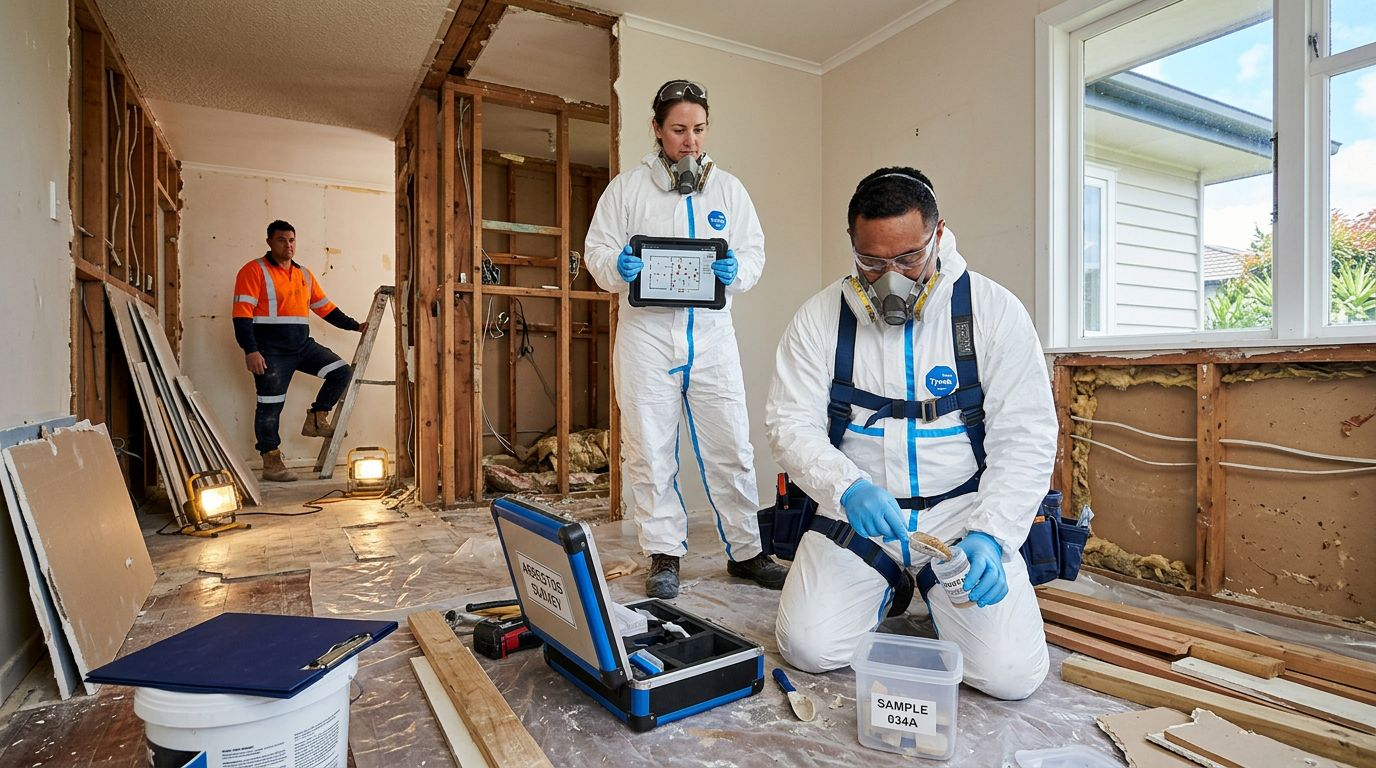
We regularly assist homeowners, landlords, and tradies across Hawke’s Bay, Napier, and Hastings who are planning renovations. Local building stock often contains asbestos in cladding, soffits, vinyl flooring, and roofing materials, making testing a critical first step.Testing involves taking a specific sample of a material and sending it to an IANZ-accredited laboratory for analysis. This is useful if you are only disturbing one specific area, such as a plumber in Petone cutting into a single wall to replace a pipe. However, DIY sampling carries significant health risks and often fails to capture the full scope of the danger.
If you are planning a significant renovation, a targeted test is rarely enough. An R&D survey is a more intrusive inspection. Our surveyors look behind walls, under floorboards, and inside ceiling voids to find every possible instance of asbestos in the work area. This is a legal requirement for most commercial refurbishments and is considered best practice for residential projects to ensure the safety of the tradespeople on site.
To understand the full process from the initial sample to the final report, read our guide on The Full Spectrum of Asbestos Testing.
Why Independence Matters
WorkSafe guidance recommends using independent asbestos consultants who are separate from removal companies. This ensures there is no conflict of interest. When we conduct a survey, our goal is to provide an accurate, honest assessment of the risk. We have no financial incentive to recommend expensive removal work if it is not necessary. Our reports are written in plain English, providing you with a clear roadmap for compliance and safety without the "scare-mongering" often found in the industry.
Whether you are a landlord in Tararua managing a rental property or a developer in Taupō overseeing a commercial strip-out, our BOHS-qualified surveyors provide the expertise needed to keep your project moving safely. We use IANZ-accredited labs for all testing, ensuring your results meet the highest standards of accuracy.
If your property was built before 2000, disturbing materials without testing can expose you and others to hazardous asbestos fibres.
At Asbestos Safe Consultancy, we provide independent, WorkSafe-compliant asbestos inspections and testing across:
- Napier
- Hastings
- Hawke’s Bay
- Gisborne
- Manawatu
- Taupo
✔ Independent from removal companies (fully WorkSafe compliant)
✔ Fast turnaround to avoid project delays
✔ Clear, professional certification
👉 Call 022 460 7184 today to book your asbestos clearance inspection
👉 Or email: asbestossafeconsultancy@outlook.co.nz
.