
Asbestos Survey Showdown: Management vs. Demolition – Which One Saves Your NZ Project (and Wallet)?
Management Survey vs. Demolition Survey: Which One Do You Actually Need?
Key Takeaways
- Management surveys cover buildings during normal daily use and routine maintenance.
- Refurbishment and demolition surveys are mandatory before any structural work on pre-2000 buildings.
- Using the wrong survey type can lead to project shutdowns and fines of up to $250,000 for businesses.
- Independent surveys provide unbiased results, ensuring your project stays safe and compliant.
Choosing the right asbestos survey is the difference between a smooth project and a costly legal headache. In New Zealand, asbestos remains a significant health risk, contributing to approximately 220 deaths each year. Because of this, the regulations surrounding property work are strict. Whether you are managing a commercial building in Napier or planning a renovation in Gisborne, you must identify asbestos before any work begins.
We often see property owners confused by the different types of surveys available. Selecting the wrong one often results in undetected materials being disturbed, which puts workers at risk and invites heavy penalties from WorkSafe. Understanding the specific purpose of each survey ensures you meet your legal obligations under the Health and Safety at Work (Asbestos) Regulations 2016.
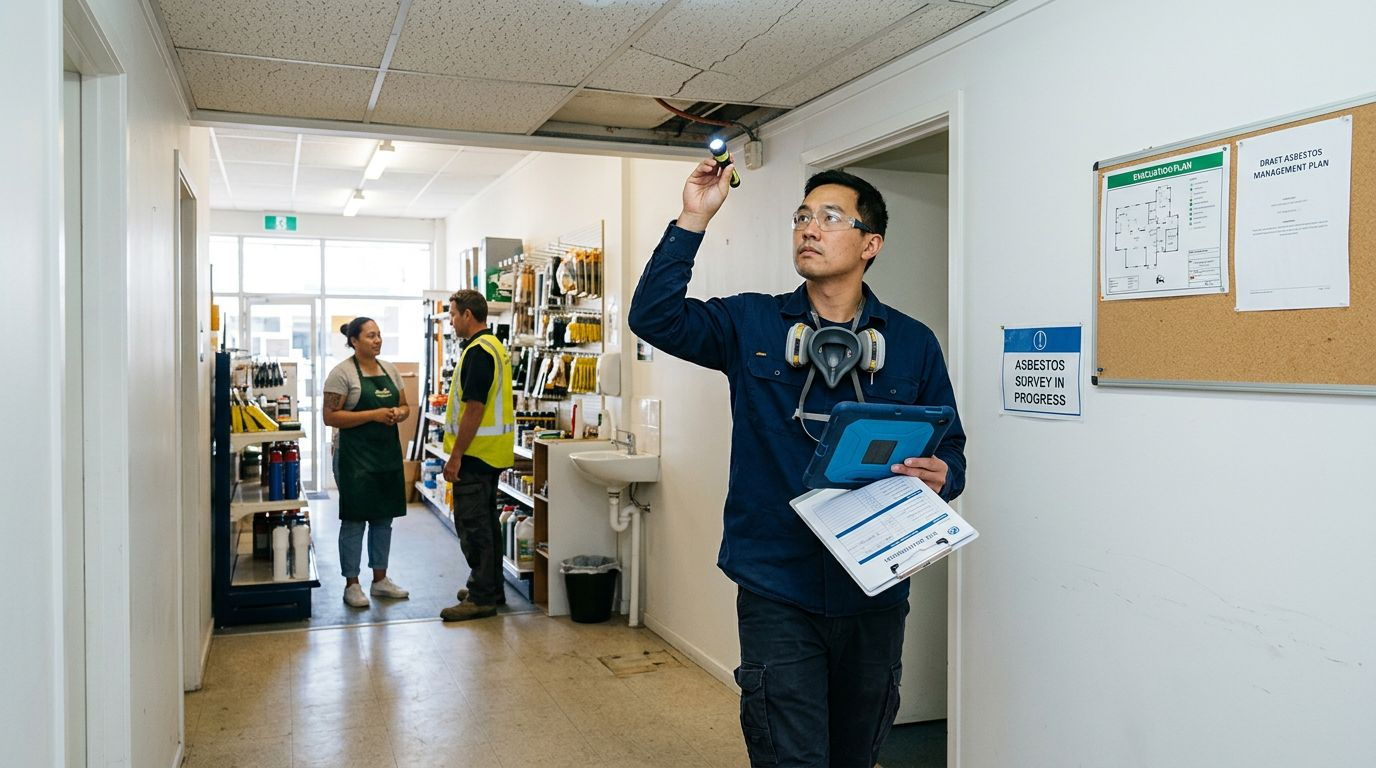
The Asbestos Management Survey: For Daily Operations
A management survey is the standard starting point for any commercial property or workplace built before 2000\. Its primary purpose is to locate asbestos-containing materials (ACMs) that could be disturbed during normal occupation or routine maintenance. This survey is largely non-intrusive. We look at accessible areas to assess the condition of the materials and determine if they pose a risk to the people using the building every day.
The data from this survey forms the foundation of your Asbestos Management Plan. This plan is a legal requirement for PCBUs (Persons Conducting a Business or Undertaking) where asbestos is present or likely to be present. It outlines how you will manage the risks over time, including regular re-inspections to ensure the materials have not deteriorated.
Take a property manager in Hastings looking after a block of older retail shops, for example. A management survey allows them to create a register so that when a plumber comes in to fix a leaking tap, they know exactly which walls are safe to work near. However, this survey has limitations. It focuses on what can be seen and reached easily, meaning it often misses materials hidden deep inside wall cavities or under floor layers.
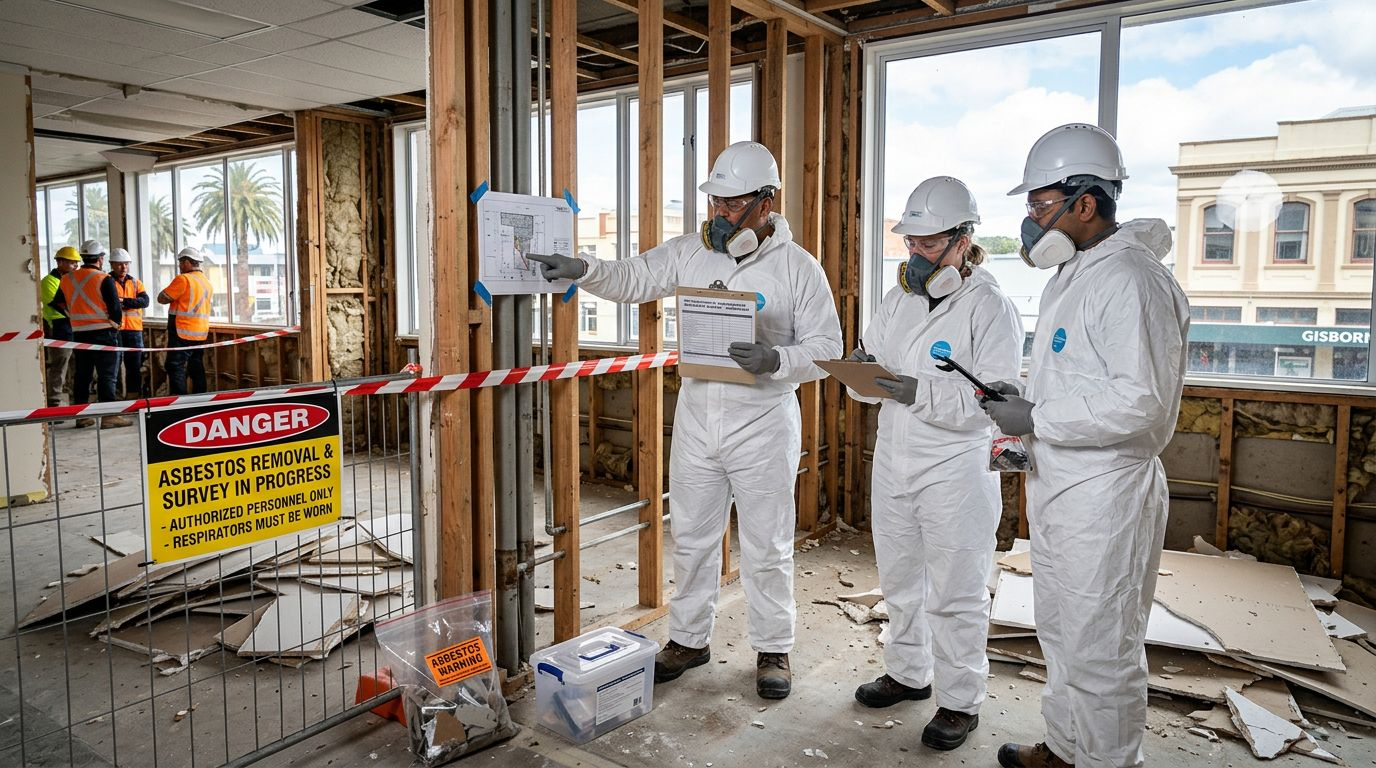
The Refurbishment and Demolition Asbestos Survey: For Construction
When you move from routine maintenance to active construction, the requirements change. A refurbishment and demolition asbestos survey is a fully intrusive and destructive inspection. It is required by law before any work starts that might disturb the fabric of a building constructed before 2000.
Unlike a management survey, this process involves getting into the "bones" of the structure. We check behind wall linings, inside ceiling voids, and under floor coverings. Because this work involves disturbing the building, the areas being surveyed must be unoccupied. The goal is to find every piece of asbestos in the work zone so it can be safely removed before the main contractors arrive.
For a developer in Gisborne planning to strip out an old office space for a new cafe, a management survey is insufficient. They require a refurbishment survey targeting the specific areas of the fit-out. If they were knocking the entire building down, a full demolition survey would be necessary to cover the entire structure from the roof tiles to the underground pipes.
You can learn more about the technical differences in our detailed guide on asbestos surveys explained.
Comparing the Two: Which One Fits Your Situation?
The choice between these two surveys depends entirely on your intent for the building. If your goal is to maintain a safe environment for staff and tenants during their daily activities, a management survey is the correct choice. This survey populates your asbestos register and keeps you compliant with ongoing health and safety duties.
If your goal involves changing the building, such as removing walls, replacing a roof, or full-scale demolition, you must opt for a refurbishment and demolition survey. This is a legal requirement in New Zealand for pre-2000 properties. Relying on a management survey for construction work is a common compliance failure that leads to undetected asbestos being smashed or cut, releasing dangerous fibres into the air.
The consequences of getting this wrong are severe. WorkSafe has the authority to shut down sites immediately if asbestos is found during unauthorised work. Furthermore, businesses can face fines of up to $250,000 for failing to identify and manage these risks properly. Using the correct survey type from the start protects your budget and your reputation.
Ongoing Compliance and Re-inspections
Asbestos management is a continuous process rather than a one-off task. Once a management survey is complete and your register is in place, you must keep that information current. NZ guidance recommends reviewing your asbestos register and management plan at least every five years. If the condition of the materials changes, or if you complete a removal project, you must update your records immediately.
Many clients find it helpful to browse our asbestos FAQs to understand how these timelines apply to their specific property types. Regular re-inspections ensure that "known" asbestos remains in a safe state and that your documentation reflects the reality of the building.
The Value of Independent Advice
When you are trying to determine which survey you need, the source of the advice matters. We operate as an independent consultancy, which means we have no financial interest in asbestos removal. Our priority is providing clear, plain-English reports that tell you exactly what you have and what you need to do to stay compliant.
Independent surveying removes the conflict of interest that can occur when a removal company also performs the initial inspection. Our BOHS-trained specialists focus on accuracy and safety, ensuring your project in Hawke’s Bay, Gisborne, or the Manawatu proceeds without unexpected delays. For a comprehensive look at how we approach these inspections, you can view our full range of asbestos surveying services.
If you are still unsure which path to take, the best step is to speak with a professional. We can review your project plans and provide a straightforward recommendation on the survey type required to keep your site safe and your business compliant with New Zealand law.