
Asbestos Management Plan NZ: Your Legal Guide to Safety & Compliance
Who Needs an Asbestos Management Plan in New Zealand?
Key Takeaways
- PCBUs managing workplaces built or refurbished before 1 January 2000 must have a written asbestos management plan if asbestos is identified or assumed to be present.
- Residential landlords are legally required to identify asbestos and create a management plan for any maintenance or repair work that risks disturbing asbestos-containing materials.
- Private homeowners are generally exempt from holding a formal management plan for their own residence, though the home becomes a workplace once a contractor is engaged.
- A compliant plan must include a current asbestos register, risk assessments, and clear procedures for managing or removing the material safely.
Asbestos exposure remains a significant occupational health issue in New Zealand, causing approximately 220 deaths each year and around 1,000 new disease diagnoses annually. Because of these risks, New Zealand law is specific about who must document and manage the presence of this mineral. If you manage a building, run a business, or rent out property, understanding your obligations under the Health and Safety at Work (Asbestos) Regulations 2016 is essential for both safety and legal compliance.
The Legal Framework: HSWA and the PCBU
The duty to manage asbestos rests with the Person Conducting a Business or Undertaking (PCBU). In plain English, a PCBU is any entity or person running a business, whether for profit or not. This includes companies, sole traders, local councils, schools, and charities. If you manage or control a workplace, you hold the legal responsibility for the health and safety of everyone on-site.
Under the Health and Safety at Work (Asbestos) Regulations 2016, any PCBU with a workplace that contains, or is likely to contain, asbestos must have a written asbestos management plan in place. This requirement is particularly strict for buildings constructed or refurbished before 1 January 2000. WorkSafe assumes these older buildings contain asbestos unless a competent person proves otherwise through professional sampling.
We help businesses across Hawke’s Bay, Gisborne, and the Manawatū navigate these rules by creating comprehensive asbestos management plans that satisfy WorkSafe requirements.
Commercial Property Owners and Landlords
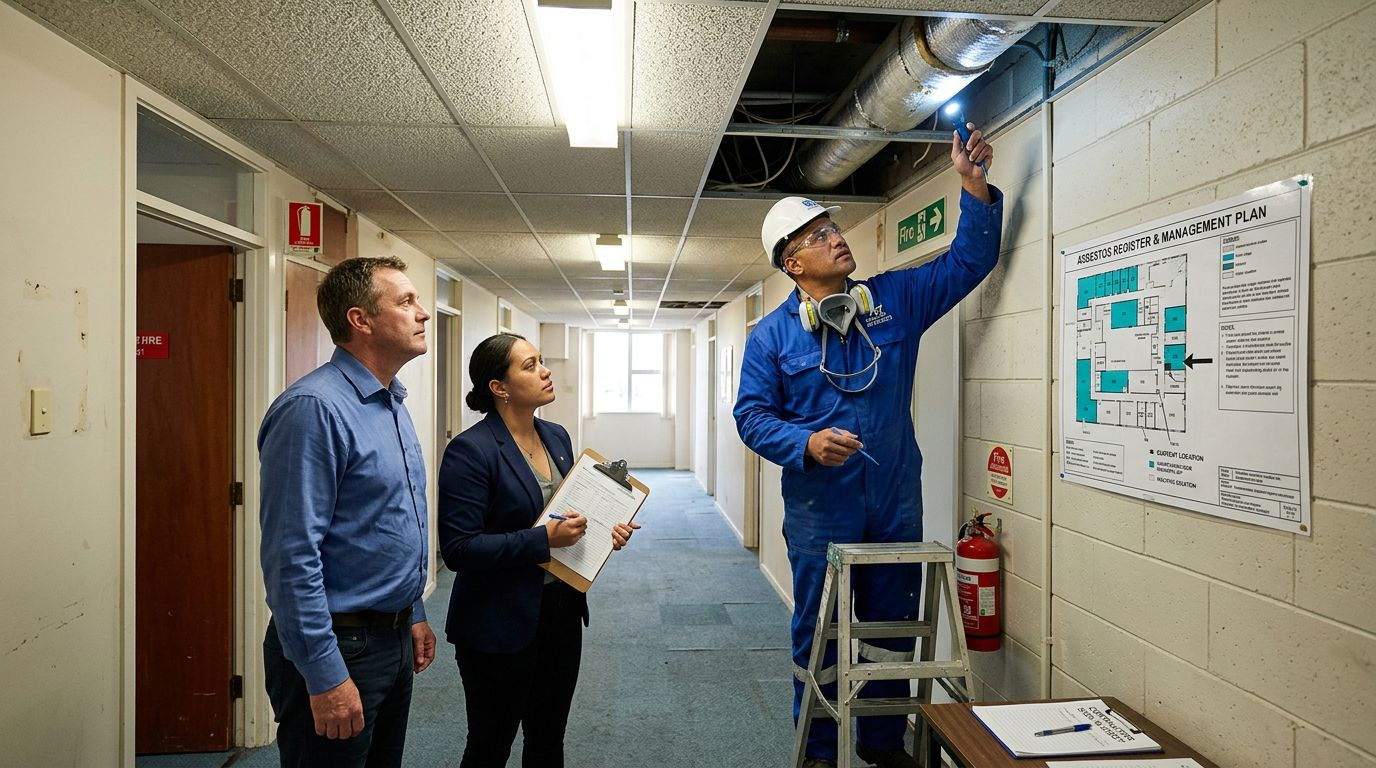
Commercial property owners and building managers carry significant duties, especially when multiple tenants occupy a single site. Take a commercial landlord in Napier managing a 1970s office block, for example. They must cooperate with every tenant PCBU to ensure a shared asbestos management plan and register are maintained. This ensures that a plumber working for one tenant does not accidentally drill into an asbestos-lined wall that the landlord is responsible for.
Residential landlords also fall under the PCBU definition. While a rental home is a private residence, it is also a place of work for property managers, cleaners, and tradies. WorkSafe guidance confirms that residential landlords must identify asbestos in the home and prepare an asbestos management plan for any work that risks exposure, such as general maintenance or repairs. Identifying these materials early through asbestos testing prevents accidental disturbance during routine tenancies.
Industrial Sites, Schools, and Public Buildings
Industrial sites, factories, and warehouses often contain high-risk asbestos-containing materials (ACMs) in plant rooms, roofing, and insulation. Because these environments undergo frequent maintenance or machinery upgrades, the risk of disturbing asbestos is high. A warehouse manager in Palmerston North must ensure that any contractor entering the site is aware of the asbestos register before they begin work.
Educational facilities and local councils also face strict requirements. School boards and leadership are PCBUs responsible for the safety of staff, students, and visitors. Whether it is a community centre in Taupō or a primary school in Gisborne, pre-2000 public buildings require a living management plan that accounts for all identified or assumed asbestos.
Homeowners vs. Workplaces
Private homeowners living in their own homes are generally not considered PCBUs. You are not legally required to hold a formal asbestos management plan simply to live in your pre-2000 house. However, the legal status of your home changes the moment you pay a contractor to perform work. For the duration of that job, your home becomes a workplace. While the primary duty to manage the risk sits with the contractor, homeowners must take reasonable care and follow safety instructions to ensure no one is put at risk.
For those managing smaller portfolios or managing their own renovations, we provide asbestos guides and templates to help you understand the practical steps of identification and safe management.
What Must Your Management Plan Include?
An asbestos management plan is more than a simple statement that asbestos exists. It is a functional document used to manage risks daily. According to WorkSafe, a compliant plan must include several core components.
The foundation of the plan is the asbestos register. This is a detailed list of all identified or presumed ACMs, noting their location, condition, and whether they are friable or non-friable. Following the register, the plan must include risk assessments and priority ratings for each material. It should outline specific control measures, such as whether to encapsulate the material, restrict access to the area, or schedule its removal.
The document must also detail procedures for emergencies, such as what to do if a ceiling tile is accidentally broken. Finally, it must outline how this information is shared with workers and contractors. We find that the most effective plans are those that are easily accessible to anyone who might disturb the building fabric.
The Importance of Surveys and Testing
To create an accurate plan, you must first know what you are dealing with. A management survey is the standard starting point for ongoing occupation. This survey identifies the location and condition of ACMs that might be disturbed during normal use or routine maintenance. If you are planning significant changes, the law requires a more intrusive asbestos demolition or refurbishment survey before work begins.
Testing suspect materials is the only way to move from "assuming" asbestos is present to "knowing" its exact type and risk level. Professional sampling involves taking small pieces of materials like textured ceilings, vinyl tiles, or fibre-cement cladding and having them analysed in an IANZ-accredited laboratory.
Ongoing Duties and Re-inspections
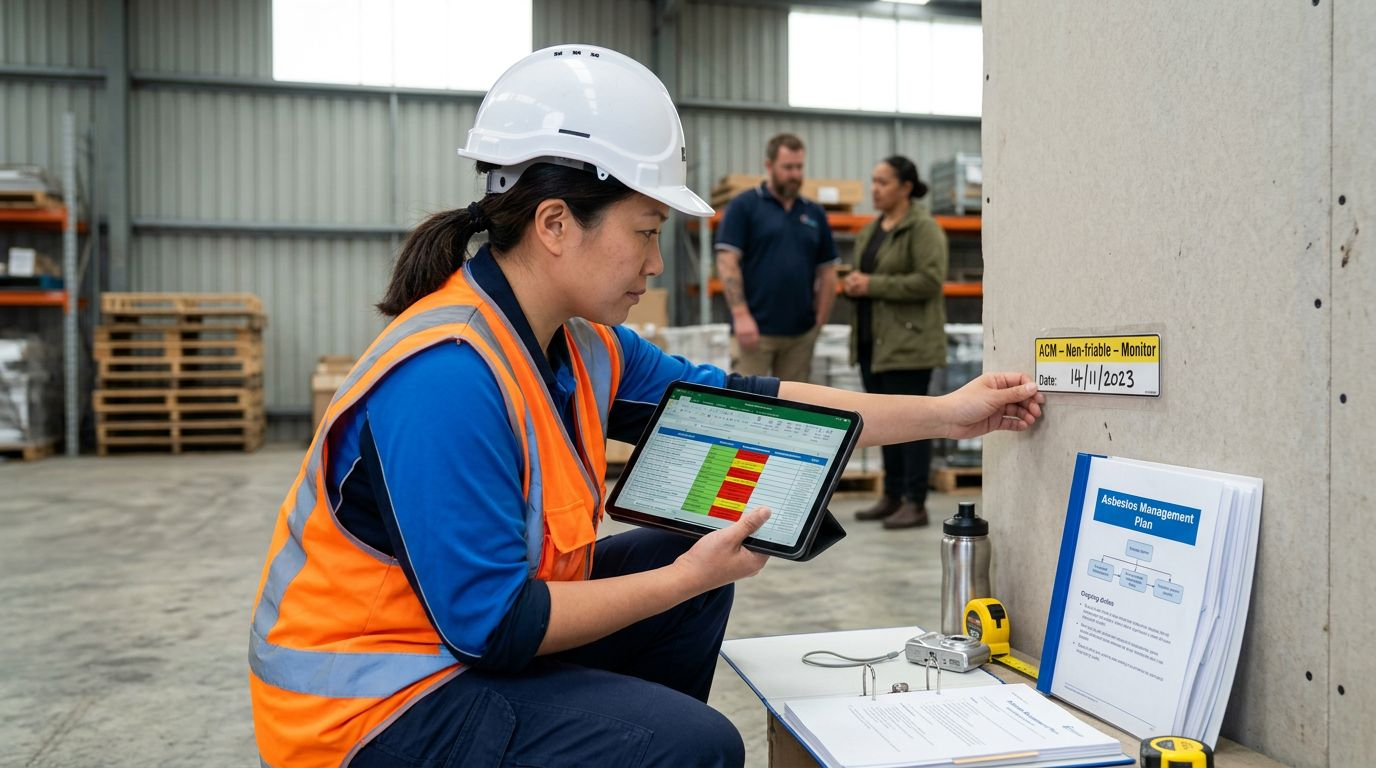
An asbestos management plan is a living document. Industry best practice and WorkSafe expectations dictate that these plans and registers should be reviewed at least every five years. Reviews must happen sooner if asbestos is removed, damaged, or if the way the workplace is used changes significantly.
Regular asbestos re-inspections are the primary way to keep your plan current. These inspections check if the condition of the asbestos has deteriorated over time, ensuring your risk assessments remain accurate. For many businesses in the Tararua and Manawatū regions, these periodic checks are a vital part of their annual health and safety audit.
Penalties for Non-Compliance
WorkSafe NZ actively enforces asbestos regulations. Failure to maintain a management plan or register can lead to significant financial penalties. For individuals, fines can reach approximately $50,000, while businesses can face penalties of $250,000 or more. Beyond the risk of prosecution, failing to manage asbestos often leads to unplanned discoveries during construction. This can shut down projects for weeks, causing massive budget overruns and damaging your professional reputation.
For more specific scenarios regarding legal duties, our asbestos management FAQs provide further clarity on common compliance questions.
Why Use an Independent Consultant?
Using an independent consultancy ensures that the advice you receive is unbiased. Because we do not perform asbestos removal ourselves, our recommendations are based solely on safety and compliance rather than a desire to secure a removal contract. This independence allows us to provide "straight up" advice on whether a material can be safely managed in situ or if removal is truly necessary. Our goal is to provide clear, plain-English reports that help you meet your legal obligations across Hawke’s Bay, Gisborne, Taupō, and the Manawatū.