
Asbestos vs. Building Reports: What NZ Home Buyers *Really* Need to Know (and Why It Could Save You Thousands!)
Why Property Buyers Need Both a Building Report and an Asbestos Survey
Key Takeaways
- Standard building reports focus on structural integrity and moisture but only flag "suspected" asbestos without confirmation.
- Professional asbestos surveys involve physical sampling and IANZ-accredited laboratory analysis to provide legal and safety certainty.
- New Zealand regulations require a specific asbestos survey before any renovation or demolition work begins on pre-2000 properties.
- Hidden asbestos can add thousands of dollars to renovation budgets and cause significant settlement delays.
- Independent consultants provide conflict-free advice because they do not perform the removal work themselves.
Buying a property in Hawke’s Bay, Manawatu, Taupo or Gisborne often feels like a race to the finish line. You tick off the boxes: finance approved, LIM report sighted, and a building inspection completed. Many buyers assume the building report covers everything under the roof, including hazardous materials. However, a standard building inspection and a professional asbestos survey serve two entirely different purposes. Relying on one to do the job of the other creates significant financial and health risks.
We see this confusion often. A buyer receives a report mentioning "potential asbestos-containing materials" in the eaves or the textured ceiling. Without a specialist survey, that "potential" remains a question mark that can haunt you during a future renovation. Understanding the distinction between these two services ensures you know exactly what you are buying into.
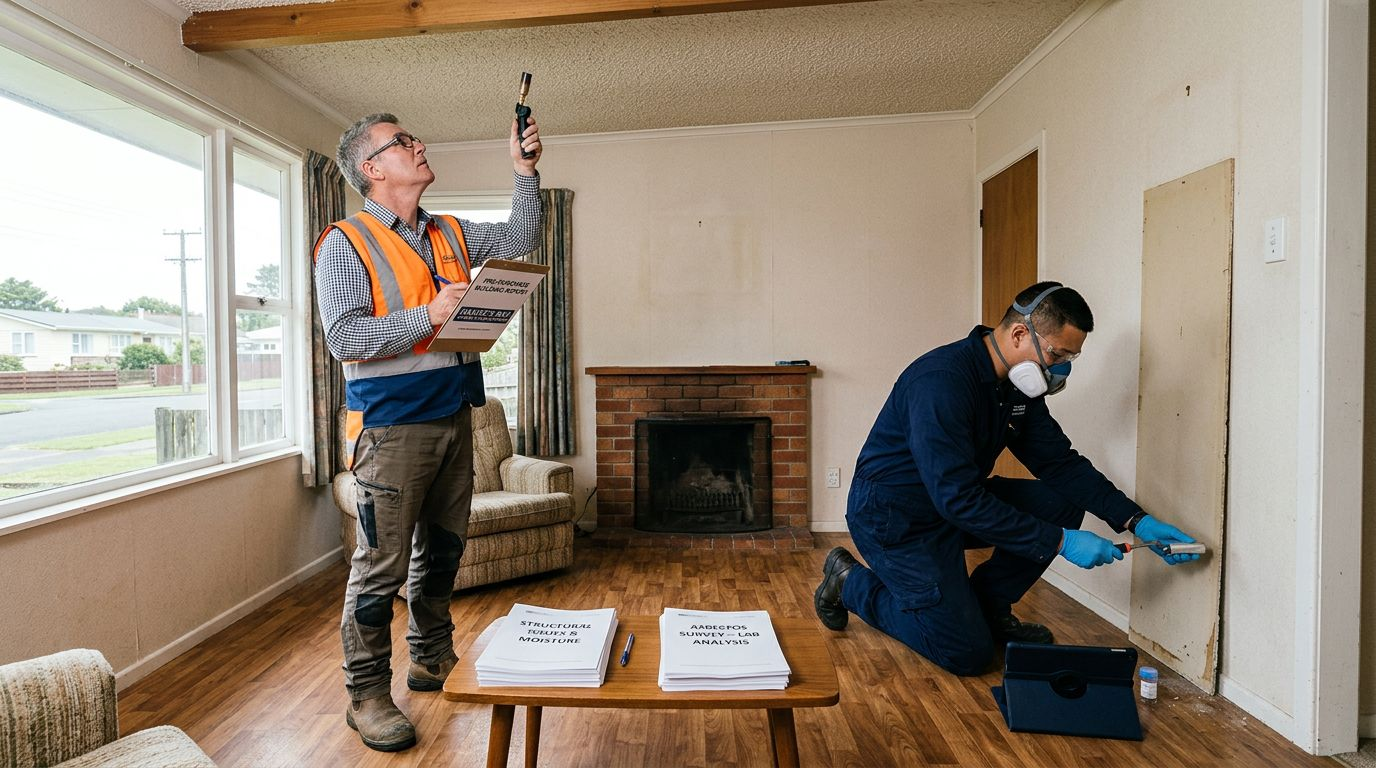
The Role of a Standard Building Report
A pre-purchase building inspection is a generalist health check for a property. The inspector looks for structural defects, weather-tightness issues, and immediate safety hazards like faulty wiring or rotting decks. Their goal is to tell you if the house is standing straight and staying dry.
When it comes to hazardous materials, a building inspector operates within a limited scope. They use their experience to flag materials that look like they might contain asbestos based on the age of the home. Because they are typically not asbestos assessors, they stop at "suspected." They do not take samples, they do not send materials to a lab, and they do not provide a management plan. Many large inspection firms now offer asbestos testing as an optional add-on, but this is a separate service from the core structural report.
The Precision of a Professional Asbestos Survey
An asbestos survey is a technical, targeted investigation. While a building report looks at the "how" of the construction, an asbestos survey looks at the "what." We focus exclusively on identifying, locating, and assessing the condition of asbestos-containing materials (ACMs).
This process is far more rigorous than a visual walk-through. A qualified surveyor follows a systematic process involving historical plan reviews and physical sampling. These samples go to an IANZ-accredited laboratory for definitive testing. The resulting report provides a clear map of where asbestos lives in the home, its current risk level, and how it must be managed. For those looking for an initial look, a pre-purchase asbestos check provides a visual, non-intrusive starting point for buyers to identify likely risks.
New Zealand’s Asbestos History and Reality
The scale of asbestos use in New Zealand is vast. During the 1960s and 1970s, New Zealand imported approximately 5,000 tonnes of asbestos annually. This material found its way into over 3,000 different building products. While blue and brown asbestos were banned in 1984, white asbestos imports continued until 1999. Any property built or renovated before 2000 likely contains some form of asbestos.
The Health and Safety at Work (Asbestos) Regulations 2016 changed how we must handle these materials. These regulations require a survey before any renovation or demolition work on pre-2000 buildings. This applies to landlords and business owners, but it also impacts residential homeowners who hire tradespeople. If a plumber or builder arrives to renovate a bathroom and suspects asbestos, they are legally required to stop work until a survey is produced.
Common Materials Often Missed at Purchase
Asbestos hides in plain sight. A building report might mention the "fibrolite" cladding, but it often misses the smaller, more dangerous inclusions. Take a 1970s bungalow in Napier, for example. The building report might look clean, but asbestos could be present in:
- The bitumen adhesive under the vinyl flooring in the kitchen.
- The backing boards behind the electrical meter box.
- The textured "popcorn" coating on the bedroom ceilings.
- The insulation lagging around hot water pipes.
- The cement gutters and downpipes.
WorkSafe NZ notes that you cannot identify asbestos just by looking at it. Only laboratory analysis provides the certainty required to plan a safe renovation or a confident purchase.
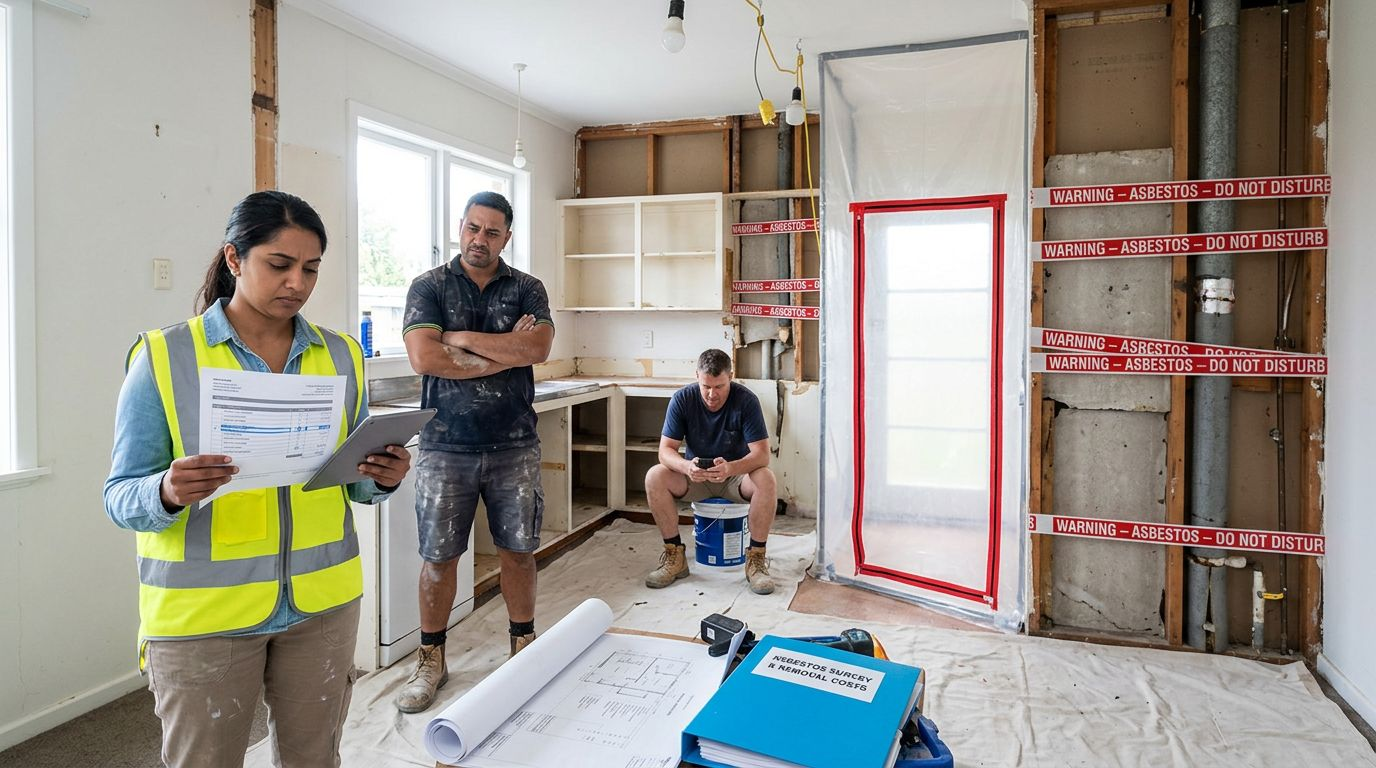
The Financial Impact of Undiscovered Asbestos
Missing asbestos during the due diligence phase leads to "budget creep" during renovations. Professional asbestos removal is a specialist trade with high overheads for safety and disposal. Typical removal costs for non-friable materials are around $60 per square metre, while friable materials (those that can be crumbled by hand) can cost $100 per square metre or more.
If you discover asbestos after the hammers start swinging, you face immediate work stoppages, emergency removal costs, and the need for independent clearance certificates. These surprises can add thousands to a project and weeks to a timeline. Having a refurbishment or demolition survey completed before you settle on the property allows you to negotiate the price or at least budget accurately for the work ahead.
Why Independence Matters
We believe in providing conflict-free advice. An independent asbestos consultancy like ours does not perform removal work. This means our reports are unbiased; we have no financial interest in finding more asbestos than is actually there. Our goal is to provide you with the facts so you can make an informed decision about your investment.
A general building inspector provides a broad overview, which is essential. However, an asbestos specialist provides the technical depth needed for high-risk materials. For a deeper understanding of the different levels of inspection available, you can read our guide on asbestos surveys explained.
Practical Steps for Buyers and Renovators
If you are looking at a property built before 2000, we recommend a tiered approach. Start with a standard building report to check the structural health. If the inspector flags potential asbestos, or if the home is of an age where ACMs are certain, commission a pre-purchase asbestos check. This gives you the leverage to ask the right questions before the contract becomes unconditional.
For those planning immediate renovations, skipping straight to a refurbishment survey is the most efficient path. This ensures you meet your legal obligations under the 2016 Regulations and protects the health of your family and your tradespeople. Asbestos-related diseases often have a latency period of 10 to 40 years. Taking the time to identify these risks today prevents a tragedy decades down the line.