
Asbestos in Your NZ Home? The Ultimate Pre-2000 Homeowner's Guide to Safety
Think Your House Might Have Asbestos? Here’s What to Check (NZ Guide)
Key Takeaways
- Buildings constructed or renovated before 2000 carry a high probability of containing asbestos materials.
- Asbestos fibres are microscopic, meaning laboratory testing is the only definitive way to confirm its presence.
- Common high-risk areas include vinyl floor backing, textured ceilings, and fibre-cement cladding.
- Disturbing suspect materials through sanding, drilling, or water-blasting creates a significant health hazard.
- Independent testing provides unbiased results, as the consultant has no financial interest in the removal process.
If you are standing in a kitchen in Napier or a garage in Hastings wondering if that grey board or old lino contains asbestos, you are asking the right question. For many New Zealanders, the dream of a "do-up" often comes with a hidden guest. Asbestos was a staple of the Kiwi building industry for decades, valued for its durability and fire resistance. However, that same durability becomes a liability when you decide to renovate, repair, or even just give the house a deep clean.
Identifying asbestos requires a mix of historical context and professional verification. While certain materials look suspicious, the reality is that many asbestos-containing products are indistinguishable from modern, safer alternatives. We have put together this guide to help you understand the risks and the necessary steps to keep your family or your workers safe.
The Pre-2000 Rule in New Zealand
New Zealand has a long history with asbestos, with heavy use peaking between the 1940s and the 1980s. While the government banned the import of most raw asbestos in 1984, existing stock remained in the supply chain for years. WorkSafe NZ advises that any building constructed or renovated before 2000 is likely to contain asbestos. This includes everything from the classic mid-century villa to a more modern-looking home built in the late 1990s.
You can find more information about the history of these materials on our Asbestos FAQs NZ page. It is a common misconception that only "old" houses are at risk. If a 1920s bungalow had a bathroom renovation in 1975, the original structure might be clear while the new linings are high-risk. We always recommend treating any pre-2000 material as "presumed asbestos" until a lab report says otherwise.
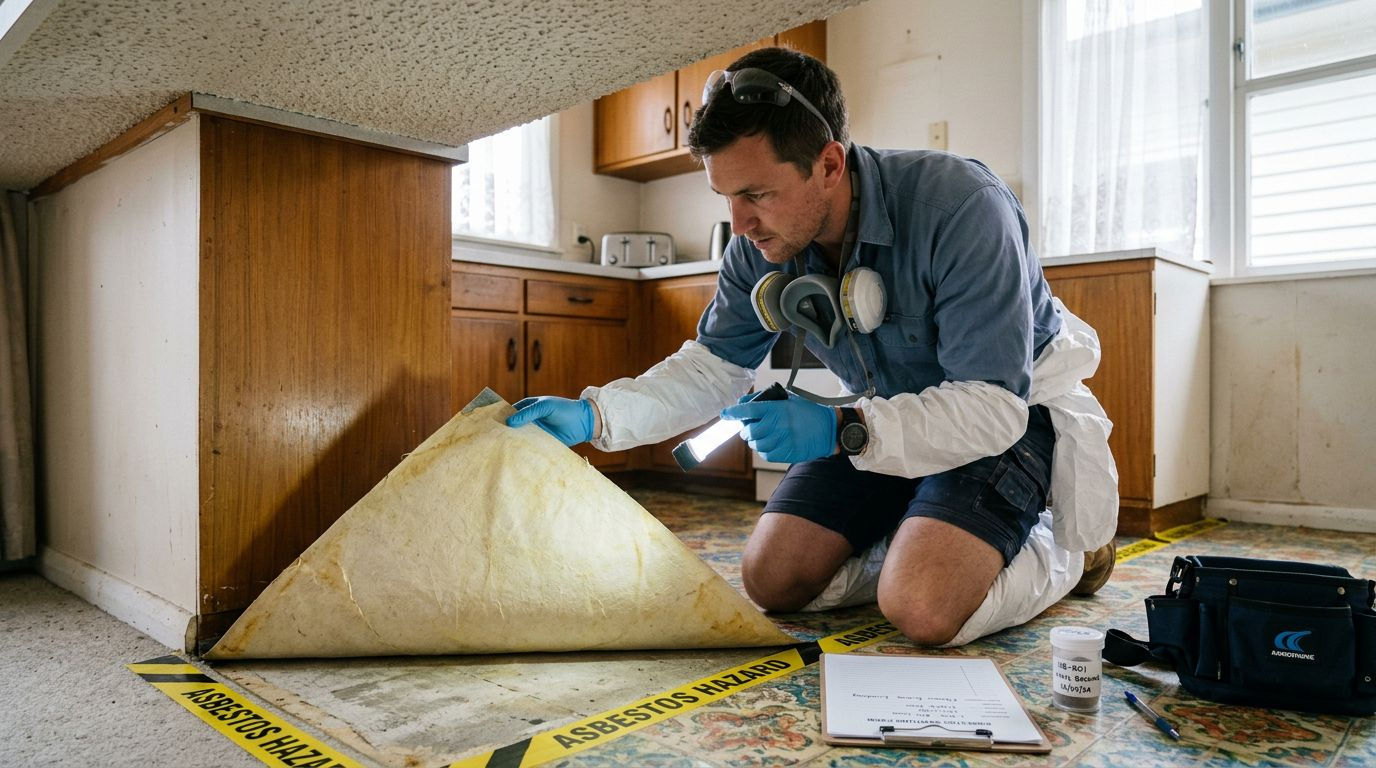
Common Locations: From the Roof to the Fence
Asbestos was used in thousands of building products. Understanding where it commonly hides allows you to plan your maintenance or renovations with more confidence.
Roofing and External Structures
Corrugated asbestos cement sheets, often known as "Super 6," were a popular choice for houses, sheds, and garages. These sheets are often grey, brittle, and may show signs of lichen growth. Some older pressed metal tiles, such as Decramastic or Harveytile, also used a mastic coating that contained asbestos. Weathered roofing is particularly risky because the binding material breaks down over time, leaving fibres loose on the surface. You should avoid walking on, drilling into, or water-blasting these surfaces, as this can release fibres into the air and soil.
Cladding and Soffits
Exterior walls often featured "Fibrolite" or similar asbestos-cement boards. These were used for main cladding, baseboards, and the flat sheets found under the eaves (soffits). These materials are generally safe if they are intact and well-painted. The danger arises during common DIY tasks like installing a new heat pump, replacing a window, or sanding back the eaves for a fresh coat of paint. These actions aerosolise the fibres, creating a direct inhalation risk.
Vinyl Flooring and Adhesives
Vinyl flooring is one of the most common places we find asbestos in New Zealand homes. It can be found in the tiles themselves, the papery backing of sheet vinyl, and the black "mastic" adhesive used to stick the flooring down. Sheet vinyl with a grey, white, or yellow backing is a major concern for renovators. Sanding or grinding these floors to prepare for new laminate or carpet is an extremely high-risk activity that can contaminate an entire home in minutes.
For a deeper look at this specific risk, read our guide on asbestos in vinyl flooring NZ. It covers the specific eras and types of flooring most likely to cause issues during a renovation.
Textured Ceilings and Decorative Coatings
Popcorn or "whisper" textured ceilings were a design staple from the 1960s through to the 1980s. These coatings often contain between 1% and 5% chrysotile asbestos. Because these coatings are "friable" (easily crumbled by hand), they are particularly hazardous. Even a simple task like scraping a small section to install a new light fitting or repair a leak can release a significant volume of fibres into the room.
Why You Cannot Rely on a Visual Check
The most important thing to understand is that you cannot reliably identify asbestos just by looking at it. Asbestos fibres are microscopic, roughly 1,200 times smaller than a human hair. While a seasoned builder might have a "hunch" based on the age and texture of a board, they are still only making an educated guess. Many non-asbestos products manufactured after the ban were designed to look exactly like the asbestos versions they replaced.
Laboratory analysis is the only certain way to find out if a material contains asbestos. This involves taking a small, representative sample and examining it under a specialised microscope. Professional testing provides a definitive answer, allowing you to proceed with your project without the weight of "what if" hanging over your head. If you are planning a project in the region, our asbestos testing Hawke’s Bay service provides fast, accurate results for homeowners and tradies alike.
The Health Risks of DIY Disturbance
Asbestos exposure remains a leading cause of work-related disease in New Zealand. Current figures suggest approximately 220 deaths and 1,000 new diagnoses occur every year due to past exposure. When asbestos-containing materials are cut, sanded, or broken, they release tiny fibres that can be inhaled deep into the lungs. This can lead to serious conditions such as asbestosis, lung cancer, and mesothelioma.
The risk is cumulative, but even short-term, high-intensity exposure during a weekend DIY project can be dangerous. Imagine a homeowner in Hastings sanding back an old vinyl floor. Without proper testing and protection, they are not just cleaning a floor; they are filling their living space with invisible, hazardous dust that settles into carpets and curtains, posing a long-term risk to everyone in the house.
You can learn more about the specific dangers facing renovators in our article on hidden asbestos dangers.

Legal Obligations for Landlords and PCBUs
If you own a rental property or run a business, your responsibilities go beyond personal safety. Under the Health and Safety at Work (Asbestos) Regulations 2016, a person conducting a business or undertaking (PCBU) must identify asbestos in the workplace if there is a risk of exposure. This includes landlords and property managers. If you are planning work on a rental property that might disturb the structure, you have a legal duty to identify any asbestos and manage the risk appropriately.
While NZ law allows unlicensed individuals to remove up to 10 square metres of non-friable asbestos, we strongly recommend using professionals. The cost of a clearance certificate and professional removal is a small price to pay for the peace of mind that your property is safe for future tenants and that you have met your legal obligations.
What to Do if You Suspect Asbestos
If you find a material you suspect contains asbestos, the best course of action is to stop work immediately. Do not attempt to take your own samples by breaking off pieces, as this creates the very dust you are trying to avoid. Keep people and pets away from the area, and do not use a domestic vacuum cleaner on any dust or debris, as standard filters will simply exhaust the fine asbestos fibres back into the air.
The next step is to call in an independent consultant. Because we do not perform removal work, our advice is completely unbiased. Our focus is on providing you with an accurate report and a practical plan. Whether you need a single sample tested or a full refurbishment survey before a major project, we are here to help.
For residents and businesses across Napier, Hastings, and the wider Hawke’s Bay, Asbestos Safe Consultancy offers professional, independent testing starting from approximately $210 + GST. We provide clear, plain-English reports that tell you exactly what you are dealing with. Contact us today to book your inspection and take the guesswork out of your next project.