
Renovating in NZ? Don't Cut Into These 5 Hidden Asbestos Dangers!
5 Asbestos Materials Kiwi Renovators Accidentally Cut Into
Key Takeaways
- New Zealand homes built or renovated before 2000 likely contain asbestos in common building materials.
- Accidental disturbance through cutting, sanding, or drilling releases hazardous fibres into the air.
- Asbestos materials in good condition often remain safe if they are identified and managed correctly.
- Independent testing is the only definitive way to confirm the presence of asbestos before starting work.
- Professional surveys ensure compliance with New Zealand health and safety regulations for homeowners and landlords.
Asbestos remains a contemporary reality for New Zealand property owners. While many associate the mineral with heavy industry, it was a staple of residential construction for decades. Thousands of homes, schools, and commercial buildings across the country still contain asbestos-containing materials (ACMs), particularly those built or renovated before the late 1980s. Because New Zealand only fully prohibited the importation of asbestos-containing products in 2016, a vast range of our housing stock requires a cautious approach during any renovation.
The risks are significant. According to WorkSafe NZ, asbestos exposure contributes to approximately 220 deaths and 1,000 new disease diagnoses every year in New Zealand. These figures highlight the importance of identifying hazardous materials before they are disturbed. Most exposure incidents in the home occur when DIY renovators or tradespeople unknowingly cut, sand, or drill into common building products. We see this frequently when property owners begin "quick" cosmetic upgrades without realising what lies beneath the surface.
A list of asbestos exposure risks in homes and buildings shows that many ordinary materials pose a threat when handled incorrectly. Understanding which materials are most likely to contain these fibres is the first step in keeping your family and your contractors safe.
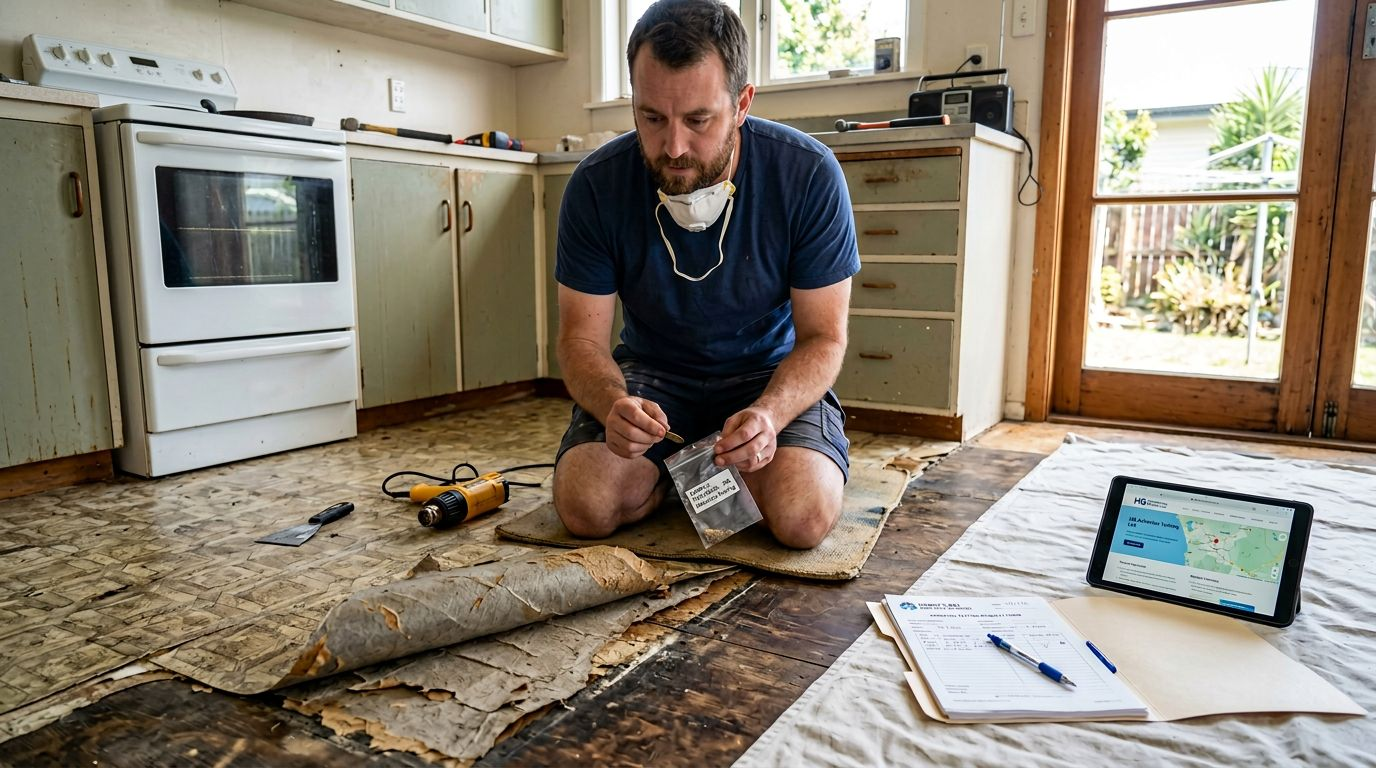
1. Vinyl Floor Tiles and Sheet Flooring
Kitchen and bathroom renovations often begin with the removal of old flooring. In many Kiwi homes built between the 1950s and the late 1980s, the vinyl tiles or the paper-like backing of sheet vinyl contain white asbestos. These materials are often brittle. When a renovator uses a scraper or a heat gun to lift old lino, they can easily pulverise the backing, releasing a high concentration of fibres into a confined space.
Take a homeowner in Napier, for example. If they decide to sand back a floor to prepare for new tiling, they might unknowingly grind asbestos-containing adhesive or backing directly into the air. Because these fibres are microscopic, they can linger in the home long after the job is finished. We recommend professional asbestos testing in Hawke’s Bay for any flooring project involving pre-2000 materials.
2. Fibre-Cement Cladding (Fibrolite)
Fibre-cement sheets, often referred to by the trade name "Fibrolite," were a dominant choice for exterior cladding and internal wet-area linings for decades. These sheets are durable and fire-resistant because they contain asbestos fibres bonded within a cement matrix. While the material is safe when left alone, it becomes hazardous the moment it is cut with a power saw or drilled to install new fixtures.
Whether you are recladding a villa in Gisborne or simply installing a new outdoor light, any penetration of the cladding requires care. Breaking these sheets creates dust that is easily inhaled. Because asbestos cement was the most common form of asbestos used in New Zealand homes, it is found in everything from main exterior walls to the baseboards around the bottom of the house.
3. Soffits and Eaves Linings
The boards tucked under the overhang of your roof, known as soffits or eaves, are a very common hiding place for asbestos. Because these areas are exposed to the elements, builders used asbestos cement for its weather-resistant properties. Renovators often disturb these when they decide to replace old timber fascias, install new downlights, or repaint the exterior of the home.
A common mistake involves using high-pressure water blasters or wire brushes to prep these surfaces for painting. This process strips away the top layer of the cement and releases fibres into the garden and the air. If you are planning exterior maintenance on an older property, an asbestos survey is the best way to determine if your soffits require specialised handling.
4. Textured Ceilings (Popcorn or Glamatex)
Textured "popcorn" ceilings were a major interior design trend in New Zealand from the 1960s through to the 1980s. Products like Glamatex or Whisper often contain between 1% and 5% chrysotile asbestos. These ceilings are particularly risky because they are often "friable," meaning they can be easily crumbled or reduced to powder by hand pressure.
Renovators often accidentally disturb these ceilings when they attempt to scrape away the texture to create a modern, smooth finish. Even drilling a hole for a new pendant light or a smoke alarm can release enough dust to contaminate a room. Before you touch a textured ceiling, it is vital to have a sample analysed by a lab to confirm its contents.
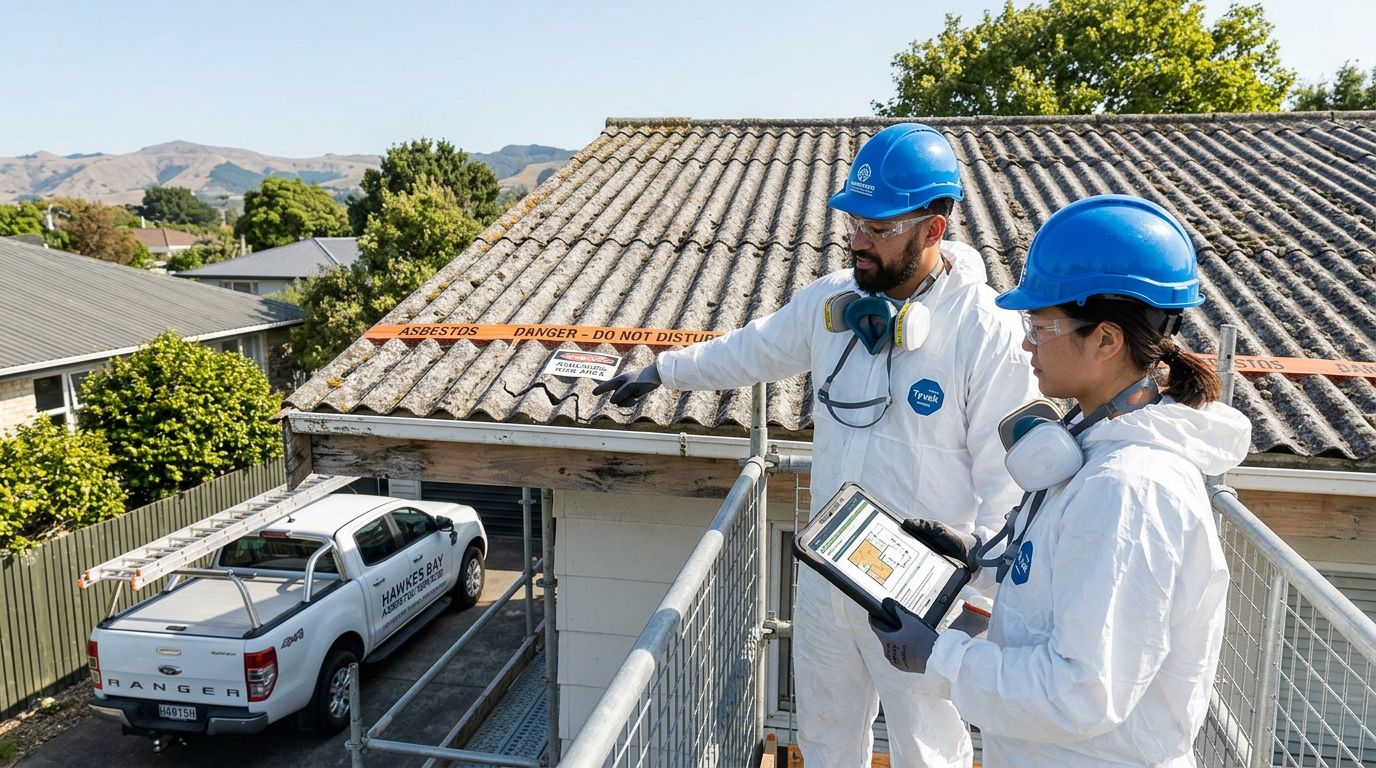
5. Asbestos Cement Roofing (Super 6)
Corrugated asbestos cement roofing, commonly known as "Super 6," is a familiar sight on older New Zealand homes, garages, and sheds. While these roofs are incredibly long-lasting, they eventually weather and become brittle. The risk increases significantly when a property owner decides to clean the roof or replace it with modern iron.
Walking on these roofs can cause them to crack, while water-blasting them is strictly prohibited under New Zealand regulations due to the massive release of contaminated slurry. Older Decramastic stone-chip tiles also fall into this category, as the mastic used to bond the chips often contained asbestos. Professional guidance on Super 6 and Decramastic roofing suggests that replacement should always be handled by those with the correct safety equipment.
Managing Risk Without Panic
The presence of asbestos does not automatically necessitate its removal. Asbestos remains safe when it is in good condition and left undisturbed. WorkSafe NZ provides a hierarchy of controls for managing these materials, which includes options like enclosure, encapsulation, or sealing. In many cases, leaving the material in place and monitoring its condition is the most practical and cost-effective solution.
Panic removals often lead to more harm than good. If an untrained person attempts to remove asbestos without the proper containment and PPE, they risk contaminating their entire property. A managed approach, guided by an independent expert, ensures that you only spend money where it is truly necessary for safety and compliance.
Legal Obligations and the "Don't Guess, Test" Rule
Under the Health and Safety at Work (Asbestos) Regulations 2016, anyone who is a Person Conducting a Business or Undertaking (PCBU), such as a landlord, commercial building manager, or employer, has a legal duty to identify asbestos in their buildings. This involves creating an asbestos management plan if the material is present. For major renovations or demolitions, a more intensive survey is required to ensure no hidden asbestos is disturbed during the work.
For homeowners, the rules are slightly different but the risks are the same. While you are legally allowed to remove up to 10 square metres of non-friable asbestos yourself, we strongly advise against it. The official guidance on removing asbestos from the home recommends using licensed professionals for any significant quantity to ensure the waste is disposed of at an approved landfill and the site is left clean.
We provide clear, plain-English advice to help you navigate these requirements. Our team offers various types of inspections, and you can read more about asbestos surveys explained to see which one fits your specific project, whether it is a simple check before a bathroom re-fit or a full audit before a demolition.
Planning a renovation? Don’t cut into asbestos by mistake.
Book asbestos testing before you start.
- ✔ Fast turnaround (results in ~7 working days)
- ✔ Independent from removal companies
- ✔ Serving Napier, Hastings, Hawke’s Bay, Gisborne, Taupo & Manawatū
✔ Independent from removal companies (fully WorkSafe compliant)
✔ Fast turnaround to avoid project delays
✔ Clear, professional certification
👉 Call 022 460 7184 today to book your asbestos clearance inspection
👉 Or email: asbestossafeconsultancy@outlook.co.nz