
Asbestos in Vinyl Flooring NZ
Asbestos in Vinyl Flooring: What NZ Homeowners Need to Know Before Renovating
Key Takeaways
- Many New Zealand homes built or renovated between 1950 and 2000 contain asbestos in flooring materials.
- Asbestos is commonly found in vinyl tiles, sheet flooring backing, and the adhesives used to stick them down.
- Disturbing these materials through sanding, grinding, or scraping releases hazardous fibres into the air.
- Professional, independent testing is the only way to confirm if your flooring is safe to remove.
We often see homeowners across Hawke’s Bay and Taupō get excited about a weekend renovation project, only to stop dead when they pull up a corner of old lino. It is a common scenario because, for decades, asbestos was a staple of the New Zealand building industry. While it provided durability and fire resistance, we now know the long term health costs are significant. WorkSafe NZ reports that asbestos exposure contributes to approximately 220 deaths and around 1,000 new disease diagnoses every year in New Zealand. These figures represent a current health crisis rather than a problem of the past.
When you are planning to modernise a kitchen, laundry, or bathroom in an older property, the floor is often the first thing to go. However, if your home was built or renovated between 1950 and 2000, there is a high probability that the vinyl flooring contains asbestos. Before you reach for the scraper or the floor sander, you need to understand what you are dealing with. We recommend booking independent asbestos testing for any suspected vinyl flooring to ensure your renovation stays safe and compliant.
The History of Asbestos in New Zealand Flooring
Asbestos was a popular choice for New Zealand homes built between 1950 and 1990 because of its hard-wearing properties. According to research from Savy Enviro, vinyl flooring was a staple in NZ homes during this era, and any property built or renovated up until the year 2000 carries a risk. In our experience, people often assume that if the vinyl looks like plastic, it must be safe. The reality is that asbestos was used as both a strengthening fibre and a powdered filler, sometimes making up as much as 70% of the product weight.
Most houses built before 1975 have a very high probability of containing asbestos building products. While the use of these materials tapered off, houses built up until the late 1990s should still be treated with caution. This is why the "pre-2000 rule" is so vital for Kiwi renovators. If you are working on a house from this period, you must assume asbestos is present until a lab test proves otherwise.
Where the Hazard Hides: Tiles, Sheets, and Glues
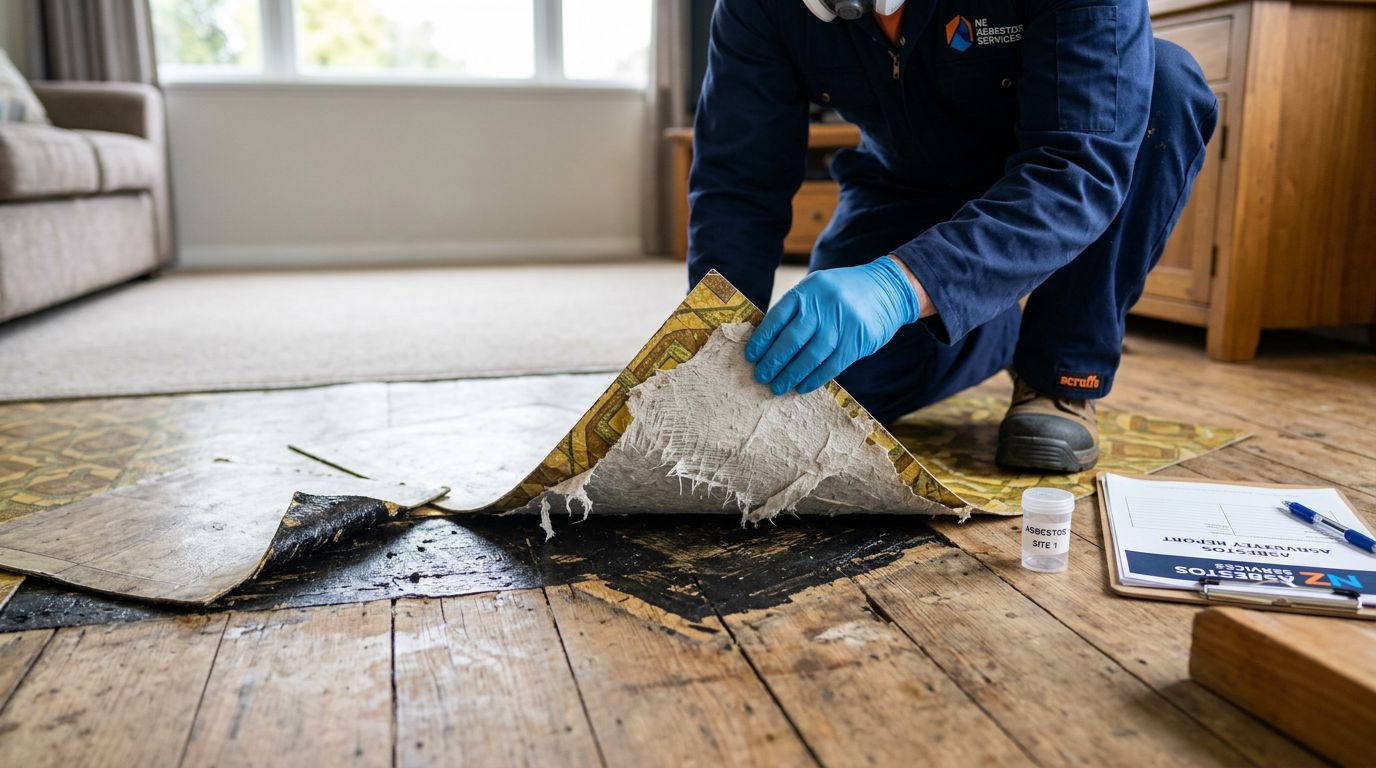
Asbestos does not always sit in the wear layer of the flooring where you can see it. Te Whatu Ora (Health New Zealand) notes that asbestos is found in some vinyl floor tiles and linoleum, as well as the backing of vinyl sheet flooring and the adhesives used during installation. This creates a multi-layered risk for anyone attempting a DIY removal.
Vinyl tiles are generally considered non-friable, meaning the asbestos fibres are bonded tightly within the plastic and are less likely to become airborne if the tiles remain intact. However, vinyl sheet flooring often featured a white, grey, or yellowish "papery" backing. This material is frequently friable, which means it can be easily crumbled or reduced to powder by hand pressure. This backing poses a significantly greater exposure risk because it releases thousands of microscopic fibres the moment it is torn or scraped. We have seen many cases where a homeowner successfully removes the tiles, only to spend hours sanding back the black mastic adhesive or the paper backing, unknowingly filling their home with hazardous dust.
Why Sanding and Grinding are High-Risk Activities
The danger of asbestos lies in inhalation. When materials are left alone and in good condition, they generally pose little risk. The hazard arises during home maintenance, repair, and remodelling. Te Whatu Ora warns that people are often exposed indoors when sanding down asbestos-containing linoleum or tiles. Using power tools like grinders or sanders on these surfaces creates a fine dust that stays airborne for hours and is easily breathed into the lungs.
In our professional opinion, there is no safe way to identify asbestos by sight, and attempting to remove or sand vinyl flooring without testing can release hazardous fibres into your home within minutes.. You cannot identify asbestos by simply looking at the colour or pattern of the floor. Some of the most innocent-looking cream or beige tiles from the 70s are the ones with the highest asbestos content. If you are a landlord or a business owner, you also have specific legal duties under the Health and Safety at Work (Asbestos) Regulations 2016. You can learn more about your legal obligations for pre-2000 homes to ensure you are protecting your tenants and contractors.
What Does Independent Asbestos Testing Cost?
Many homeowners hesitate to test because they fear the cost will blow their renovation budget. In reality, testing is a small investment compared to the cost of a professional decontamination if you accidentally spread asbestos dust through your home. We believe in transparent, straightforward pricing to help New Zealanders make informed decisions. Our asbestos testing and survey prices are designed to be accessible for residential projects.
Asbestos testing starts from $210 + GST, which includes the site visit, sample collection by a qualified consultant, and IANZ-accredited laboratory analysis. If you are planning a larger project, a Management Survey starts from $299 + GST, while a more intensive Refurbishment and Demolition Survey starts from $349 + GST. These surveys provide a comprehensive map of where asbestos is located throughout the property, not just in the flooring. It is important to note that additional samples or travel outside the Hawke’s Bay region may incur extra costs, but we always provide a clear quote before starting work.
The Importance of Independent Advice
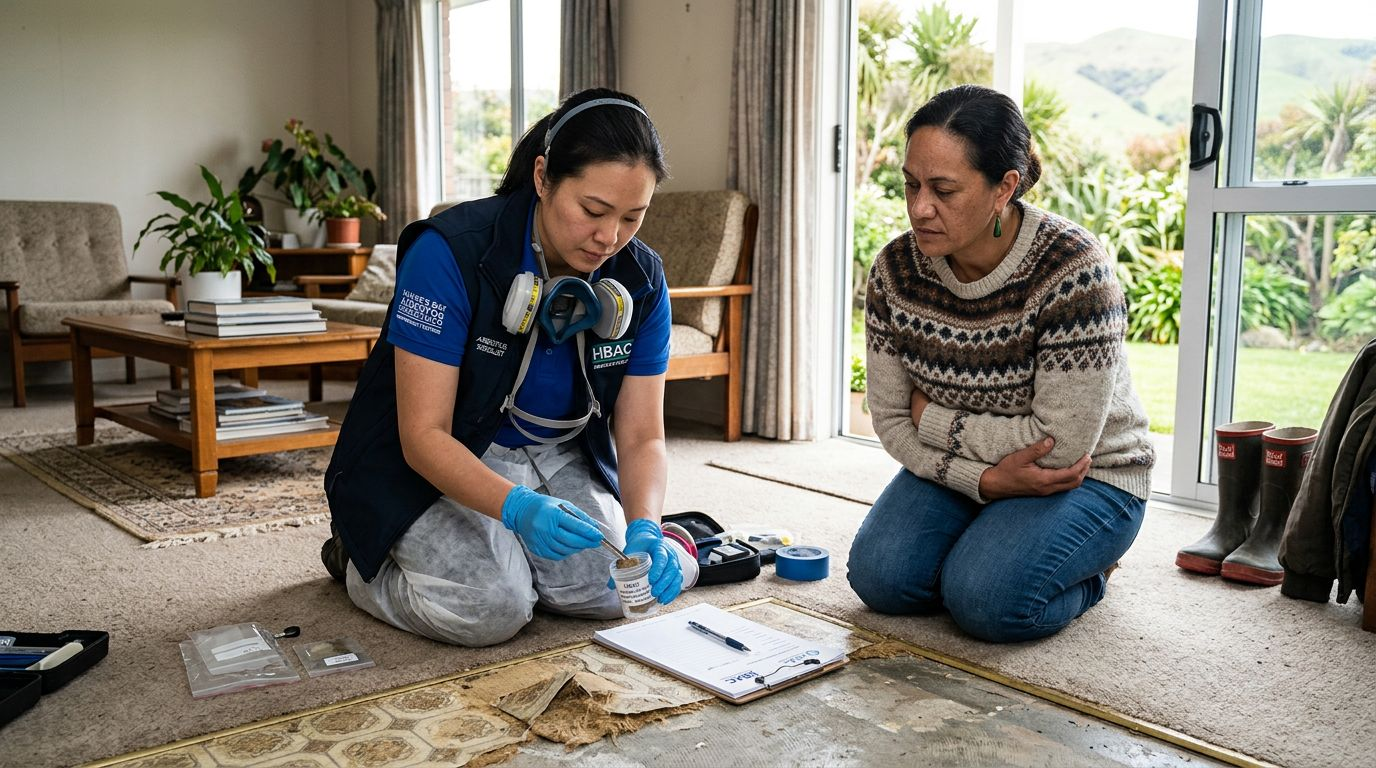
When you suspect asbestos is present, you need an advocate who is focused solely on your safety. We provide independent advice, which means we do not remove asbestos ourselves. This removes any conflict of interest: our only goal is to give you an accurate assessment of the risk. Our team holds BOHS IP402 to IP405 qualifications and brings over a decade of experience from both New Zealand and Australia to every inspection.
Whether you are a homeowner in Gisborne or a tradesperson in Tararua, the process remains the same: stop, test, and then plan. If a test comes back positive, we can guide you on the next steps, whether that involves sealing the floor under a new layer of laminate or engaging a licensed removalist. For those undertaking significant renovations, our guide to hidden asbestos dangers covers other common materials like textured ceilings and cladding that you might encounter.
Protect Your Home and Health
Renovating your home should be an exciting time of improvement, not a source of long term health anxiety. Given that asbestos exposure still causes 220 deaths a year in New Zealand, taking a "she’ll be right" attitude toward old vinyl flooring is simply not worth the risk. The microscopic fibres that cause asbestosis and mesothelioma are invisible to the naked eye, making professional laboratory analysis the only definitive way to stay safe.
If you are planning to lift old vinyl, sand back adhesives, or renovate any wet area in a pre-2000 home, reach out to us first. We provide fast, accurate, and fully certified testing across Hawke’s Bay, Taupō, Gisborne, and the surrounding regions. You can contact Asbestos Safe Consultancy on 022 460 7184 to book an inspection or discuss your project. We are here to help you navigate the process with practical, expert advice so you can get back to your renovation with total peace of mind.
Should You Test Your Vinyl Flooring?
If your home was built or renovated before 2000 and you are planning to remove, sand, or disturb vinyl flooring, testing is strongly recommended.
Even if the flooring looks modern or in good condition, asbestos may still be present in:
- The backing layer
- Adhesives underneath
- Older layers hidden below
👉 The only way to know for certain is through professional testing.
If your home was built before 2000, do not remove or sand vinyl flooring until it has been tested for asbestos.
We provide fast, independent asbestos testing across:
- Napier
- Hastings
- Hawke’s Bay
- Gisborne
- Manawatu
- Taupo
✔ Independent from removal companies (fully WorkSafe compliant)
✔ Fast turnaround to avoid project delays
✔ Clear, professional certification
👉 Call 022 460 7184 today to book your asbestos clearance inspection
👉 Or email: asbestossafeconsultancy@outlook.co.nz