
What Happens If You Disturb Asbestos? | NZ Safety & Compliance Guide
What Happens If You Disturb Asbestos? A Practical Guide for NZ Property Owners
Key Takeaways
- Disturbing asbestos releases microscopic fibres that remain airborne and are easily inhaled.
- Health risks such as mesothelioma and asbestosis often appear decades after the initial exposure.
- Stopping work immediately and isolating the area is the most critical first step after accidental disturbance.
- Professional testing is the only way to confirm the presence of asbestos in pre-2000 buildings.
When you cut, drill, or sand materials containing asbestos, you release microscopic fibres into the air. These fibres are often invisible to the naked eye but pose significant long-term health risks once inhaled. In New Zealand, many buildings constructed or renovated before 1 January 2000 contain these materials, making accidental disturbance a common occurrence during renovations or repairs.
We see this often across Hawke’s Bay and Taupō. A homeowner might decide to sand back old vinyl flooring or a builder might cut into a fibre-cement soffit without realising the material contains asbestos. The moment that material is fractured, the risk profile of the site changes entirely.
Understanding Asbestos Disturbance
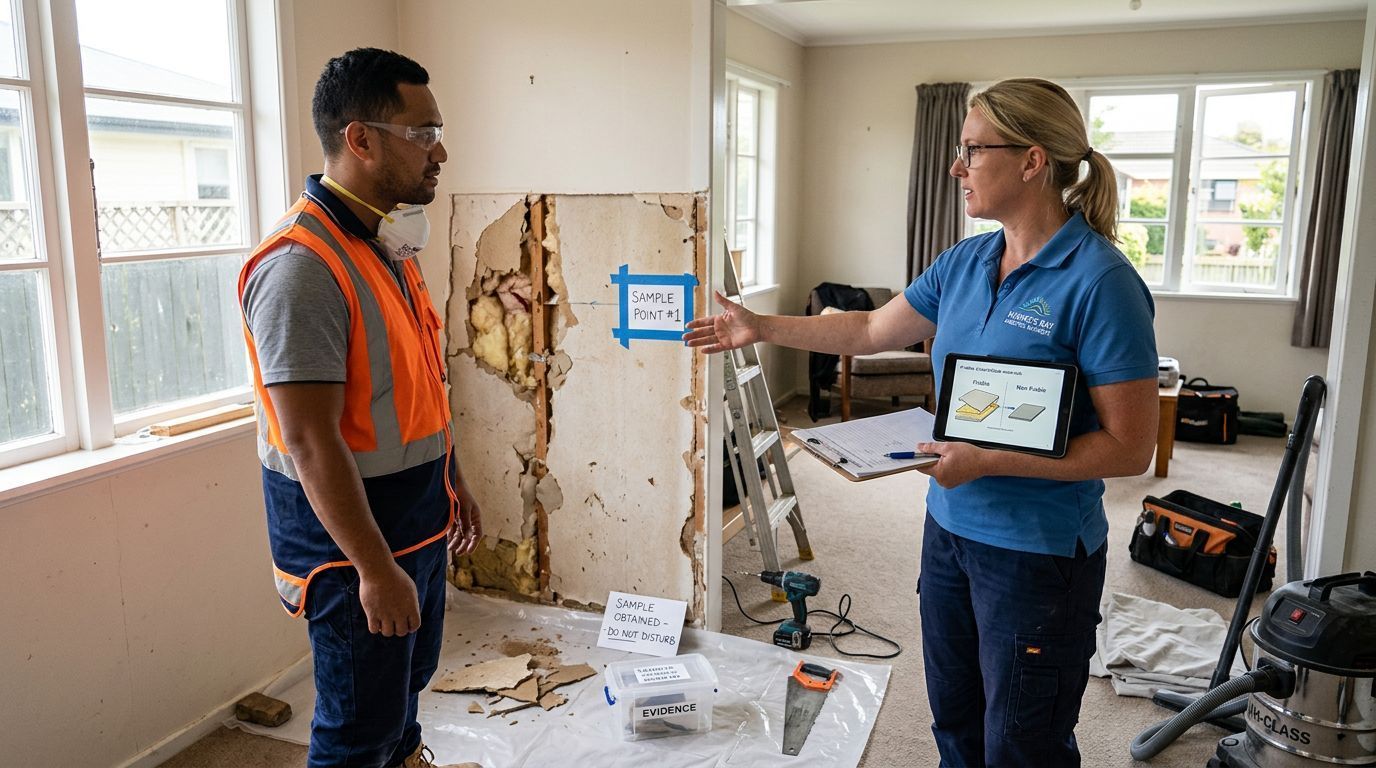
Asbestos-containing materials (ACMs) generally fall into two categories: friable and non-friable. Friable asbestos is crumbly or powdery and releases fibres with very little effort. Non-friable asbestos, which is more common in NZ residential properties, involves fibres bonded into a solid matrix like cement or vinyl. While non-friable materials are safer when left alone, they become dangerous the moment they are damaged, weathered, or aggressively worked on.
Common activities that cause disturbance include waterblasting a decramastic roof, drilling into internal wall linings, or breaking up old cladding during a demolition. These actions grind the material down, turning a solid product into a fine, hazardous dust. Whether you are a landlord in Gisborne or a developer in Tararua, understanding that any mechanical force applied to these materials creates an inhalation risk is vital for site safety.
The Biological Impact of Inhaled Fibres
The danger of asbestos lies in the physical structure of its fibres. When inhaled, these tiny, sharp needles travel deep into the lungs and lodge themselves in the tissue and lining. The body cannot easily break these fibres down or expel them. Over time, their presence causes inflammation and scarring, which can eventually lead to abnormal cell growth.
According to the World Health Organization, all forms of asbestos are carcinogenic. The National Cancer Institute notes that there is no known safe level of exposure. While the risk of disease increases with the duration and intensity of exposure, even a single event involving high concentrations of fibres can lead to serious health issues later in life.
Long-Term Health Risks
Asbestos-related diseases have a long latency period, meaning symptoms often take 10 to 40 years to appear. This delay often leads to a false sense of security immediately after an accidental disturbance. The primary conditions linked to exposure include:
- Mesothelioma: An aggressive cancer of the lung or abdominal lining.
- Lung Cancer: A risk that is significantly higher for those who also smoke.
- Asbestosis: A chronic lung disease caused by permanent scarring of the lung tissue.
- Pleural Thickening: A condition that restricts lung expansion and causes breathlessness.
In New Zealand, asbestos remains the single largest cause of work-related fatalities. Data from WorkSafe NZ indicates that approximately 220 people die each year from diseases related to past asbestos exposure. These figures highlight why we must treat every suspect material with extreme caution.
Immediate Steps to Take After Accidental Disturbance
If you suspect you have accidentally disturbed asbestos, your priority is to contain the contamination. Panic often leads to further spread, so remaining calm and following a set protocol is essential. The following steps are recommended by WorkSafe for managing an accidental release:
- Stop work immediately and turn off any fans or ventilation systems.
- Evacuate the area and keep everyone, including pets, away from the site.
- Close all doors and windows to prevent fibres from drifting into other rooms.
- Wipe down your skin and shoes with damp rags, then bag the rags and your outer clothing.
- Avoid using a household vacuum or broom, as these will simply blow fibres back into the air.
Once the area is isolated, you need professional guidance to assess the extent of the contamination. You can learn more about how we identify these risks on our Asbestos Testing NZ service page.

The Role of Testing and Air Monitoring
You cannot identify asbestos by sight alone. A textured ceiling in a Napier home might look identical to a modern plaster finish, but only laboratory analysis can confirm the presence of fibres. Professional testing involves taking a representative sample under controlled conditions and sending it to an IANZ-accredited laboratory for analysis.
In cases where a significant disturbance has occurred, air monitoring becomes necessary. This process involves measuring the concentration of airborne fibres to ensure they fall below the NZ workplace limit of 0.1 fibres per millilitre of air. This data provides the evidence needed to confirm a site is safe for re-occupation.
Independent consultants are best placed to provide this service. Because we do not perform removal work, our advice remains unbiased and focused solely on your safety. You can find detailed information on this process via our Asbestos Air Monitoring NZ page.
Legal Obligations for Property Owners
The Health and Safety at Work (Asbestos) Regulations 2016 place clear responsibilities on "Persons Conducting a Business or Undertaking" (PCBUs). This includes landlords, commercial building managers, and renovation contractors. If you are planning work on a building constructed before 2000, you have a legal duty to identify any asbestos that could be disturbed.
Failure to identify asbestos before starting a project often leads to significant delays, increased costs, and potential liability if workers or tenants are exposed. For residential owners, we have developed a comprehensive Pre-2000 Homeowner's Guide to Safety to help you navigate these requirements.
Why Choose Independent Consultancy?
Managing asbestos risk requires a clear, technical approach. Asbestos Safe Consultancy provides independent surveys, testing, and air monitoring across Hawke’s Bay, Gisborne, Taupō, and Tararua. Our team holds BOHS qualifications and brings over a decade of experience to every inspection. By separating the assessment from the removal, we ensure that you only pay for the work that is truly necessary to keep your site compliant and your people safe.
If you are concerned about a potential disturbance or need to plan a safe renovation, contact us today. We provide fast, reliable results and plain-English reports that help you make informed decisions about your property.
Contact Asbestos Safe Consultancy on 022 460 7184 for expert advice and independent testing services.