
Who Tests for Asbestos in NZ? Qualified Professionals Explained
Who Tests for Asbestos in New Zealand? A Guide to Qualified Professionals
Key Takeaways
- Asbestos testing requires a "competent person" with specific BOHS qualifications and field experience.
- Analysis of physical samples must occur within IANZ-accredited laboratories to meet New Zealand regulatory standards.
- Independence between the surveying consultant and the removal contractor is a core requirement for safety and unbiased reporting.
- WorkSafe-licensed asbestos assessors hold specific legal responsibilities for air monitoring and clearance on high-risk sites.
Identifying asbestos remains one of the most critical safety steps for any renovation or demolition project in New Zealand. Asbestos stands as the leading cause of workplace-related deaths in the country, claiming approximately 220 lives every year through diseases like mesothelioma and lung cancer. Because the risks are so high, the process of testing for these hazardous fibres is strictly regulated.
Property owners and project managers often ask exactly who possesses the authority to confirm the presence of asbestos. The answer involves a specific combination of qualified individuals, accredited laboratories, and independent oversight. Whether you are managing a commercial site in Napier or renovating a residential property in Gisborne, understanding these roles ensures your project stays compliant and your people stay safe.
The Role of the Asbestos Surveyor
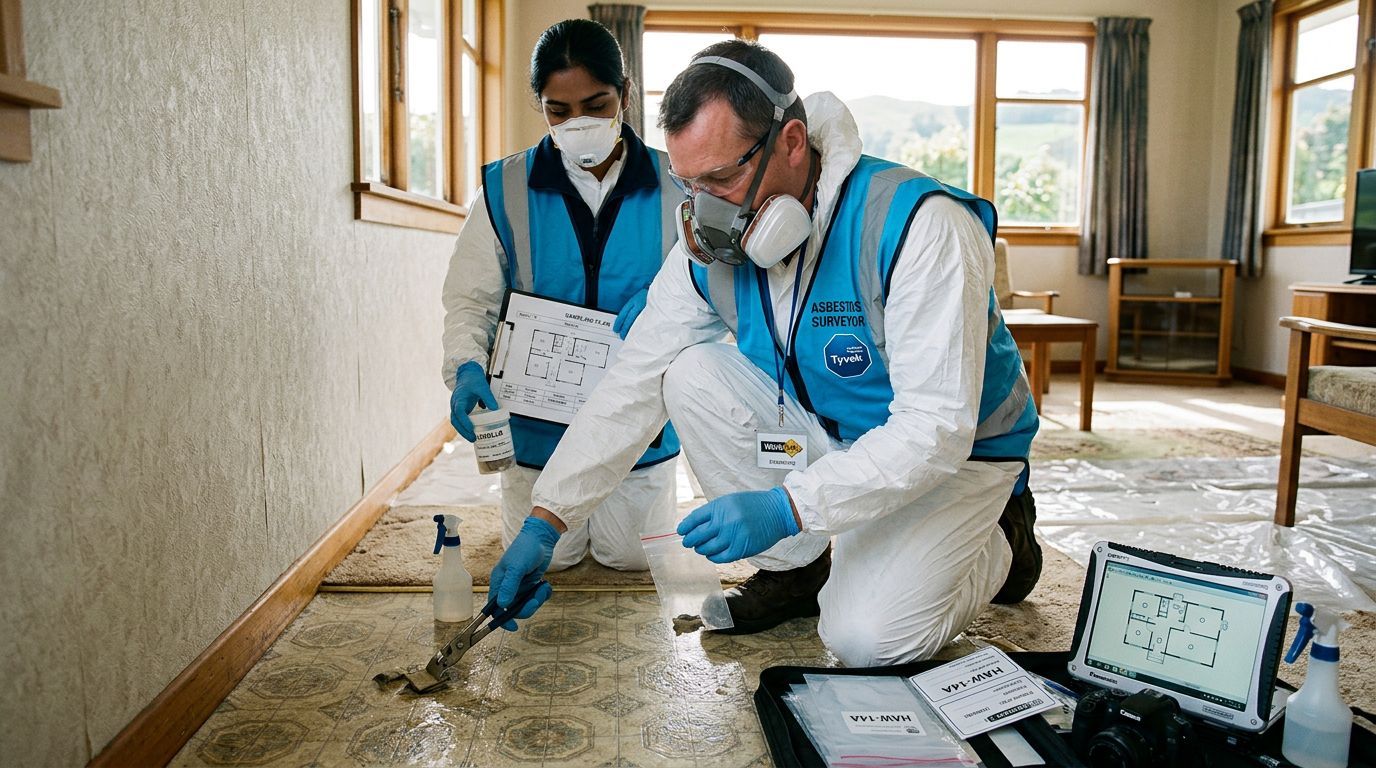
The first person involved in the testing process is the asbestos surveyor. Under the Health and Safety at Work (Asbestos) Regulations 2016, WorkSafe expects asbestos identification to be performed by a "competent person." Competency is defined by a blend of formal training and practical, supervised experience.
In the New Zealand industry, the British Occupational Hygiene Society (BOHS) qualifications serve as the benchmark for competency. A qualified surveyor typically holds the BOHS P402 or IP402 certificate, which covers the surveying and bulk sampling of asbestos in buildings. WorkSafe guidance suggests that these qualifications should be paired with at least six months of supervised field experience to ensure the surveyor can accurately identify suspect materials in complex environments.
Professional surveyors provide the expertise needed to inspect a building, create a sampling plan, and safely collect materials without contaminating the surrounding area. You can learn more about the specific types of inspections available on our service page.
Why IANZ-Accredited Laboratories Matter
A surveyor collects the samples, but a laboratory provides the definitive proof. In New Zealand, International Accreditation New Zealand (IANZ) is the authority that verifies the technical competence of testing facilities. For a test result to be legally robust, the analysis must be performed by a lab accredited to the ISO/IEC 17025 standard.
These laboratories use Polarised Light Microscopy (PLM) to identify the specific type of asbestos present, such as chrysotile, amosite, or crocidolite. It is important to distinguish between the lab and the surveyor. A lab is accredited to analyse a sample and issue a factual report, whereas an inspection body (often accredited to ISO/IEC 17020) is qualified to inspect the site and provide professional opinions on the risks found.
Recent regulatory updates have also refined how these labs operate. As of July 2024, IANZ ceased accrediting surface swab or wipe testing. However, WorkSafe continues to accept unendorsed reports from labs that maintain accreditation for other asbestos tests and possess prior experience in surface sampling. This ensures that clearance procedures remain practical while maintaining high safety standards. Detailed information on the testing and analysis process can be found here:
Licensed Asbestos Assessors and Air Monitoring
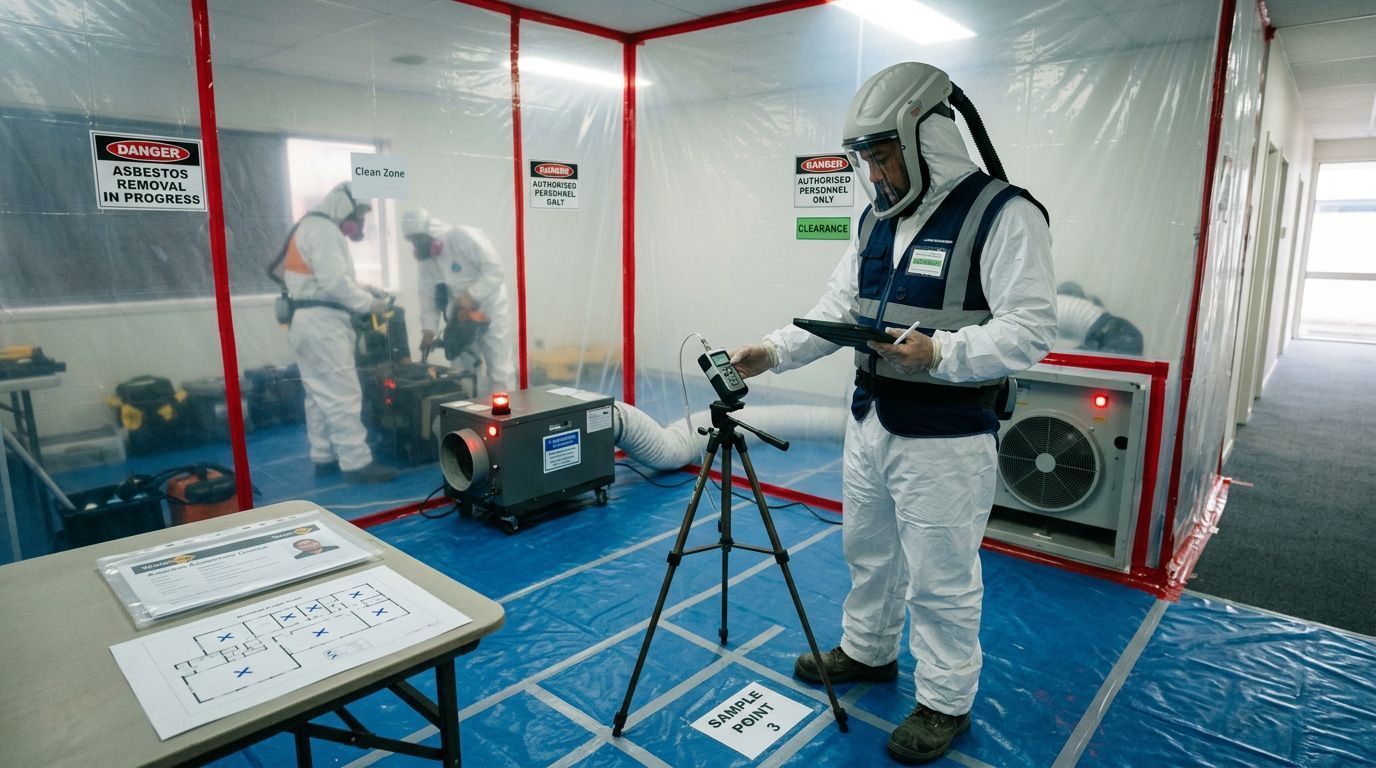
While a surveyor handles the initial identification, a Licensed Asbestos Assessor has a specific legal role during and after asbestos removal. These individuals must hold a formal licence issued by WorkSafe. Their involvement becomes mandatory during Class A (friable) asbestos removal projects.
The licensed assessor performs air monitoring to ensure that no fibres are escaping the containment area during the work. Once the removal is complete, they conduct a rigorous four-stage clearance process. This includes a visual inspection and air clearance testing to certify that the area is safe for re-occupation. The assessor acts as the final gatekeeper for safety, ensuring the removalist has completed their job to the required standard. You can verify the status of a professional through the official WorkSafe register.
The Necessity of Independence
The most important factor in choosing who tests for asbestos is independence. Best practice dictates that the company testing for asbestos should be entirely separate from the company removing it. This prevents any conflict of interest and ensures that the safety of the building occupants remains the only priority.
Take a property developer in Hawke’s Bay, for example. If they use the same company for both testing and removal, there is a risk that the scope of work could be exaggerated or that the final clearance inspection might be less than thorough. Engaging an independent consultancy provides an unbiased assessment, ensuring you only pay for the removal that is actually necessary and that the final clearance is genuinely safe. We have developed a guide to help you vet potential partners for their independence.
Vetting Your Asbestos Professional: A Checklist
When hiring someone to test for asbestos, asking the right questions protects your liability and your health. Use this checklist to confirm their qualifications:
- Are you independent from any asbestos removal contractors?
- Do your surveyors hold BOHS P402/IP402 qualifications and have at least six months of field experience?
- Which IANZ-accredited laboratory do you use for sample analysis?
- Will you provide a full survey report including photos, risk ratings, and management recommendations?
- Are your inspections carried out under an ISO 17020-accredited framework?
WorkSafe strongly advises against homeowners or untrained tradespeople collecting their own samples. Disturbing a material like textured ceiling plaster or old vinyl backing can release thousands of microscopic fibres into the air. Professional sampling occurs under controlled conditions, using specific tools and wetting agents to prevent fibre release, followed by the immediate sealing of the sample area.
For more information on the legal duties of property owners and managers, you can review the official Approved Code of Practice.
Our team at Asbestos Safe Consultancy provides 100% independent testing and surveying across Hawke’s Bay, Gisborne, and the wider region. Our consultants hold the full suite of BOHS qualifications (IP402 through IP405) and bring over a decade of experience to every site. We focus on providing clear, plain-English reports that help you manage asbestos risks without unnecessary stress or cost.
Disclaimer: This article provides general information regarding asbestos regulations in New Zealand and does not constitute legal or health advice. Asbestos is a hazardous material. Always engage a qualified professional for testing, surveying, or removal to ensure compliance with the Health and Safety at Work (Asbestos) Regulations 2016.