
Asbestos Clearance Inspector: Your Essential Guide to Qualifications & Certification
What Qualifications Should an Asbestos Clearance Inspector Have?
Key Takeaways
- A thorough asbestos clearance inspection is an important step following asbestos removal work.
- Competence is determined by a combination of qualifications, training, experience and knowledge of asbestos regulations.
- BOHS qualifications such as IP402, IP403, IP404 and IP405 each cover different aspects of asbestos management.
- Independence, attention to detail and practical experience are critical when undertaking asbestos inspections.
- Building owners and PCBUs should understand the qualifications and experience of the consultant they engage.
Why Qualifications Matter
When asbestos removal work has been completed, many people assume the project is finished. However, one of the most important stages occurs after the removal contractor has left the site – the clearance inspection.
A clearance inspection helps determine whether the removal work has been completed to an acceptable standard and whether the area can be safely reoccupied.
The person conducting the inspection should possess the knowledge and experience necessary to identify residual asbestos debris, understand asbestos risks, assess the effectiveness of removal work, and provide clear and accurate advice to clients.
For this reason, qualifications and competence are important considerations when selecting an asbestos consultant.
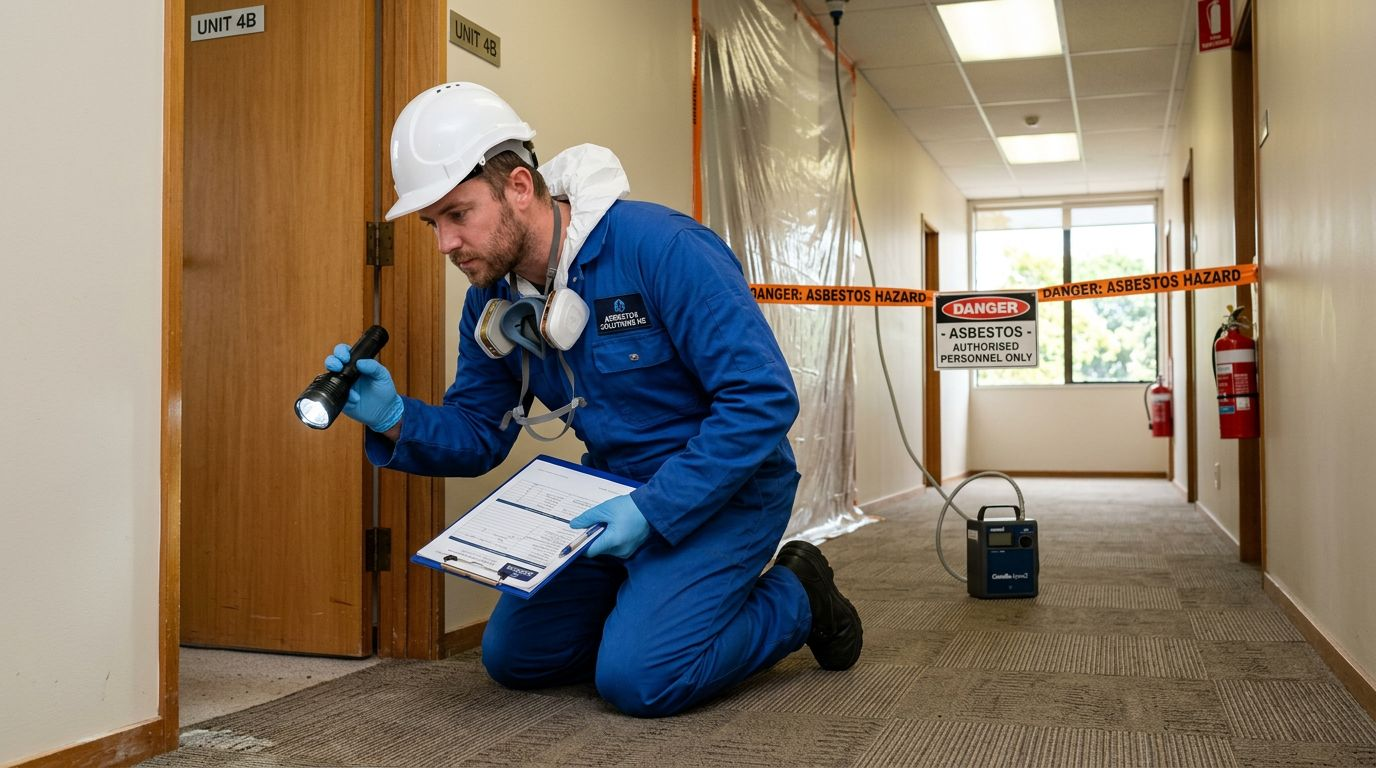
What Is an Asbestos Clearance Inspection?
A clearance inspection is typically conducted following asbestos removal work and before the area is returned to normal use.
Depending on the project, a clearance inspection may involve:
- Visual inspection of the removal area.
- Assessment of surrounding areas for asbestos debris.
- Review of the removal scope.
- Verification that visible asbestos-containing materials have been removed where required.
- Air monitoring where appropriate.
- Documentation of findings and recommendations.
The goal is to ensure the area has been inspected thoroughly and that any remaining issues are identified before occupants return.
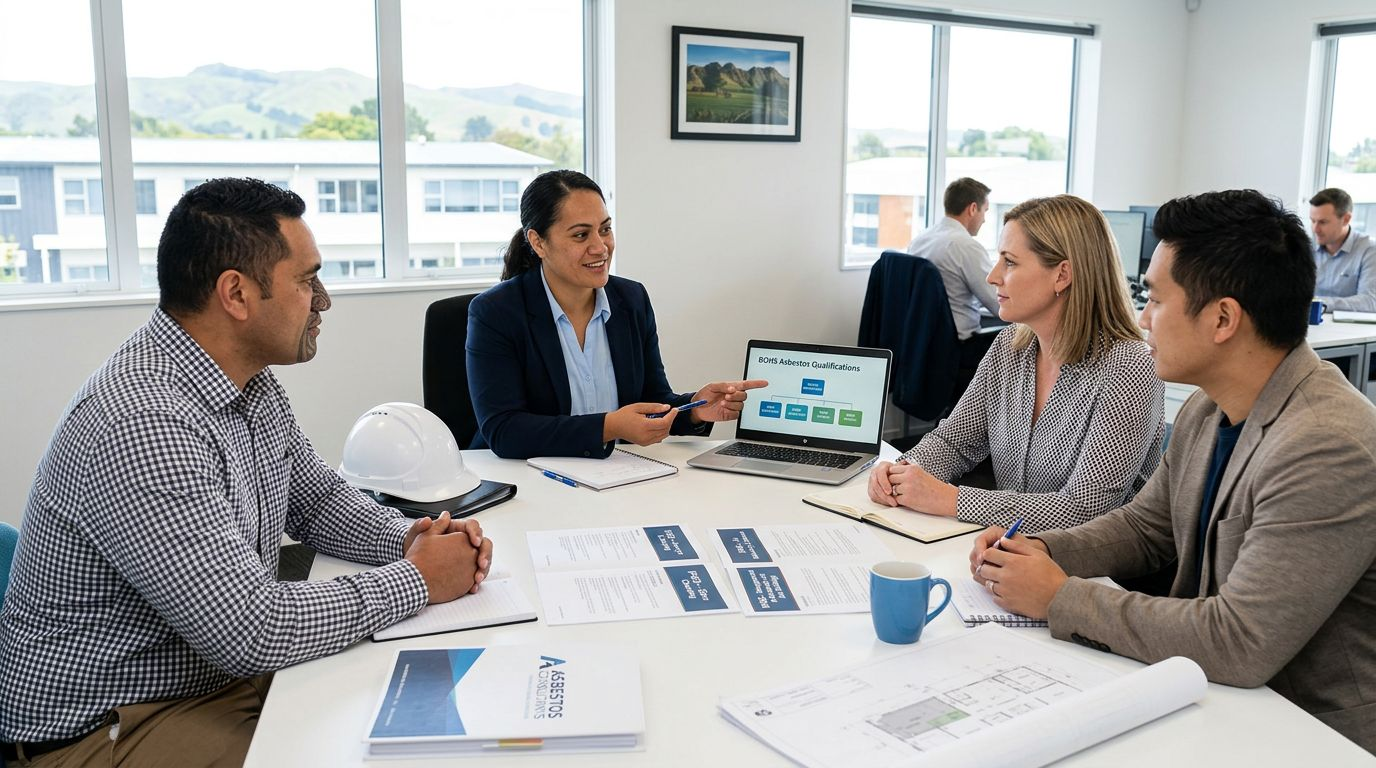
Understanding BOHS Asbestos Qualifications
The British Occupational Hygiene Society (BOHS) provides internationally recognised asbestos qualifications that are widely respected throughout New Zealand, Australia and the United Kingdom.
Each qualification focuses on a different aspect of asbestos management.
IP402 focuses on asbestos surveying and sampling.
This qualification covers:
- Identifying suspect asbestos-containing materials.
- Survey planning and execution.
- Bulk sampling techniques.
- Material assessment.
- Survey reporting.
IP402 provides the foundation for understanding where asbestos may be present within a building and how it should be identified.
IP403 focuses on airborne fibre analysis.
Topics include:
- Fibre counting methods.
- Air sample interpretation.
- Quality assurance procedures.
- Laboratory practices.
This qualification is particularly relevant to air monitoring and understanding airborne asbestos fibre concentrations.
IP404 specifically focuses on asbestos air monitoring and clearance procedures.
This qualification covers:
- Personal monitoring.
- Background monitoring.
- Reassurance monitoring.
- Leak monitoring.
- Clearance inspections.
- Air sampling equipment and methodology.
- Interpretation of monitoring results.
IP404 is often regarded as one of the key qualifications relevant to asbestos clearance inspections and air monitoring activities.
IP405 focuses on the long-term management of asbestos within buildings.
Topics include:
- Asbestos management plans.
- Risk assessments.
- Legislative requirements.
- Asbestos registers.
- Ongoing management responsibilities.
This qualification assists consultants in understanding how asbestos risks should be managed throughout the life of a building.
Qualifications Are Only Part of the Picture
While qualifications are important, they should not be viewed in isolation.
An effective asbestos consultant combines formal training with practical experience and sound professional judgement.
When engaging an asbestos consultant, consider factors such as:
- Relevant qualifications.
- Industry experience.
- Knowledge of New Zealand asbestos regulations.
- Experience with similar projects.
- Attention to detail.
- Quality of reporting and communication.
A consultant who understands both the technical and practical aspects of asbestos management can often provide greater value than qualifications alone.
The Importance of Independence
Independence is an important principle within the asbestos industry.
Property owners, businesses and PCBUs should have confidence that inspections and advice are based on professional judgement and factual observations.
An independent consultant can provide objective advice regarding asbestos risks, removal work and site conditions without external influence.
This helps ensure decisions are made in the best interests of worker safety, building occupants and regulatory compliance.
Questions to Ask Before Engaging an Asbestos Consultant
Before selecting an asbestos consultant, consider asking the following questions:
- What asbestos qualifications do you hold?
- What experience do you have conducting asbestos inspections?
- Have you worked on similar projects before?
- Do you undertake asbestos surveys, air monitoring and clearance inspections?
- How will the inspection be conducted?
- What information will be included in the final report?
The answers to these questions can help building owners and PCBUs better understand the consultant’s capability and suitability for the project.
Final Thoughts
A clearance inspection is an important part of the asbestos management process. Choosing a competent consultant with appropriate qualifications, experience and industry knowledge can help provide confidence that the inspection has been completed thoroughly and professionally.
Understanding qualifications such as BOHS IP402, IP403, IP404 and IP405 can assist building owners, property managers and PCBUs in selecting a consultant who is appropriately trained for the work being undertaken.
If you require independent asbestos advice, asbestos testing, air monitoring, asbestos surveys or clearance inspections, Asbestos Safe Consultancy provides professional asbestos consulting services throughout Hawke’s Bay, Gisborne, Taupō and Manawatū.