
Asbestos Alert! Is Your Hastings Home Hiding a Silent Killer? (What Every Owner MUST Know)
Asbestos Testing Hastings: What Property Owners Need to Know
Key Takeaways
- Properties built or renovated before 1 January 2000 likely contain asbestos materials.
- Laboratory analysis is the only definitive way to confirm if a material is hazardous.
- Independent testing prevents conflicts of interest and ensures you only pay for necessary removal.
- New Zealand law requires asbestos identification before any renovation or demolition work begins on a workplace or rental property.
- Disturbing asbestos through sanding, drilling, or water-blasting creates significant health risks for occupants and tradespeople.
If you own a property in Hastings, whether it is a classic 1960s bungalow in Akina or a commercial warehouse in Omahu, asbestos is a reality you must manage. While modern building materials are safe, the legacy of asbestos use in New Zealand remains a primary concern for anyone planning a renovation, maintenance project, or demolition. We provide clear, expert guidance to help you navigate these risks without the stress of "marketing speak" or hidden agendas.
For immediate advice or to book a site visit, phone 022 460 7184.
The Pre-2000 Reality for Hastings Buildings
New Zealand building history shows that asbestos was a staple ingredient in construction products from the 1950s through to the late 1980s. Official guidance from Te Whatu Ora and WorkSafe NZ treats any building constructed or renovated before 1 January 2000 as a likely site for asbestos-containing materials (ACMs). In Hastings, where much of our housing stock falls within this era, the "assume asbestos until proven otherwise" rule is the safest approach for every property owner.
Asbestos fibres remain invisible to the naked eye. Relying on a visual inspection is dangerous because asbestos was often mixed into ordinary-looking products like cement sheets, textured ceiling finishes, and vinyl backing. Professional asbestos testing in Hawke’s Bay provides the certainty required to protect your health and your investment.
Why Testing is Essential Before You Renovate
Asbestos is relatively safe when left undisturbed and in good condition. The danger arises the moment you start a DIY project or bring in contractors to modernise a space. Activities such as drilling into a soffit to install security cameras, sanding down old vinyl glue, or water-blasting a roof release microscopic fibres into the air. Once inhaled, these fibres can lead to serious diseases like mesothelioma, lung cancer, and asbestosis.
The health burden in New Zealand is significant. WorkSafe estimates approximately 220 deaths per year occur due to asbestos-related diseases. This makes asbestos the number one work-related killer in the country. By arranging a survey before work starts, you ensure that these invisible risks are identified and managed before they become a health crisis for your family or your tenants.
Common Asbestos Materials in Hastings Homes
We frequently encounter several specific materials in the Hastings and wider Hawke’s Bay area. Understanding where these materials hide helps you identify when to call for professional help.
Exterior cladding and soffits are high-probability areas. Fibre-cement weatherboards and the flat sheets used under roof overhangs (eaves) often contain asbestos. You can find more detail on this in our guide to asbestos in NZ soffits and eaves.
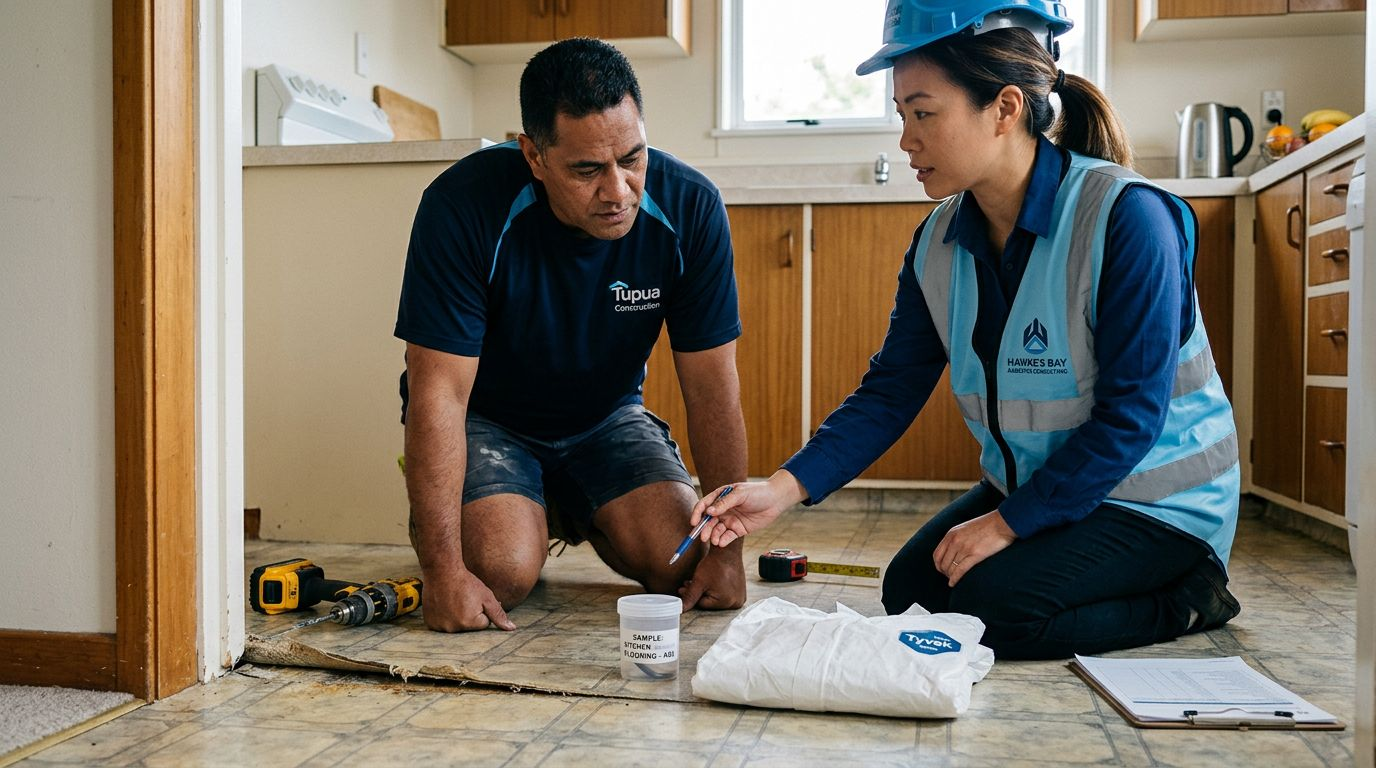
Flooring is another common culprit. Many Hastings kitchens and laundries feature older sheet vinyl or tiles. Often, the asbestos is found in the papery backing of the vinyl or the dark adhesives used to stick the flooring down. Research from InspectApedia notes that some legacy flooring products in New Zealand contained as much as 70 percent asbestos by weight. For a deeper look at this specific risk, read our article on asbestos in vinyl flooring.
Other common materials include:
- Textured "popcorn" ceilings and decorative internal coatings.
- Decramastic roofing tiles with bituminous coatings.
- Internal fibre-cement linings in wet areas like bathrooms and toilets.
- Electrical meter board backings.
You can view a comprehensive list of these items in our resource on common asbestos materials in NZ homes.

Legal Obligations for Property Owners and Landlords
Compliance is a legal requirement rather than a suggestion. The Health and Safety at Work (Asbestos) Regulations 2016 place specific duties on "Persons Conducting a Business or Undertaking" (PCBUs). This category includes landlords, commercial building owners, and business operators. If you own a rental property in Hastings built before 2000, you must identify any asbestos present before allowing refurbishment or demolition work to proceed.
For workplaces, the law requires an Asbestos Management Plan if asbestos is identified or assumed to be present. This plan must be kept up to date and reviewed at least every five years. Failing to identify asbestos before work begins can lead to significant project delays, heavy fines from WorkSafe, and potential liability if workers are exposed to fibres. We specialise in helping owners meet these requirements through our asbestos services in Hastings, ensuring your documentation is robust and compliant.
To discuss your compliance needs, phone 022 460 7184.
The Importance of Independent Testing
Choosing an independent consultant for your asbestos testing offers the best protection for your wallet and your peace of mind. Asbestos Safe Consultancy is 100 percent independent of removal contractors. This means we have zero financial incentive to recommend expensive removal work that might not be necessary. Our goal is to provide an accurate, unbiased report that tells you exactly what is there and how to manage it safely.
Independent reports provide a clear roadmap. If a material is in good condition, we might recommend managing it in place, saving you thousands in unnecessary removal costs. If removal is required, our reports specify exactly what needs to go and whether it requires a Class A or Class B licensed professional. This clarity allows you to get accurate quotes from removalists based on facts, not guesswork.
What to Do Next
If you are planning work on a pre-2000 property in Hastings, follow these steps to stay safe and compliant:
First, pause all physical work. Avoid cutting, sanding, or water-blasting any suspect materials until they are verified. Second, contact an independent consultant to discuss the age of your property and the scope of your planned project. We can help you determine if you need a simple targeted test or a full refurbishment survey.
Third, arrange for a site visit. We collect samples safely and send them to IANZ-accredited laboratories for analysis. Finally, use the resulting report to plan your project. Whether you are a homeowner in Havelock North or a property manager in the CBD, having a professional report in hand is your best defence against health risks and legal complications.
We are local to Hawke’s Bay and regularly work throughout Hastings. For fast, professional, and independent asbestos testing, phone 022 460 7184 today.