
Asbestos in NZ Soffits & Eaves: Your Pre-2000 Home Safety Guide
Asbestos in Soffits and Eaves: The Essential Guide for NZ Property Owners
Key Takeaways
- Homes built or renovated in New Zealand before 2000 frequently contain asbestos-cement sheeting in the eaves and soffits.
- Disturbing these materials through drilling, sanding, or water-blasting releases microscopic fibres that pose severe long-term health risks.
- Laboratory analysis is the only definitive way to identify asbestos, as modern non-asbestos fibre-cement looks identical to older, hazardous versions.
- Property owners and landlords have legal obligations under the Health and Safety at Work (Asbestos) Regulations 2016 to manage these risks safely.
We often find that when homeowners in Hawke’s Bay or Gisborne plan an exterior renovation, they focus on the roof or the cladding. The flat boards tucked away under the roof overhang, known as the soffits and eaves, usually stay out of mind because they are painted and appear intact. However, these areas are among the most common locations for asbestos-cement in New Zealand houses built before the turn of the millennium.
Understanding what these materials are and how to handle them is vital for the safety of your family, your tenants, and any tradespeople working on your property. If you suspect your home contains these materials, you can learn more about our professional sampling process on our Asbestos Testing NZ page.
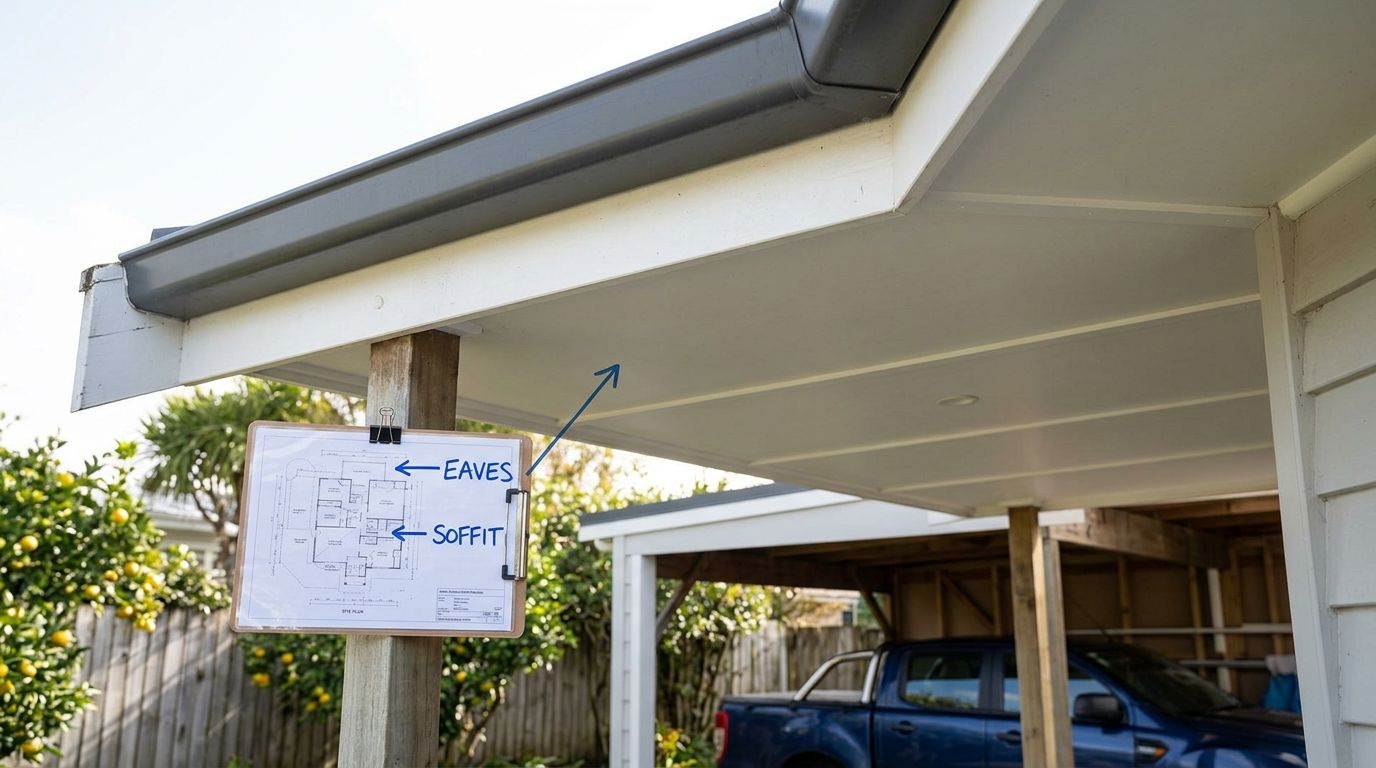
Defining Soffits and Eaves in the NZ Context
The eaves are the edges of the roof that hang out over the exterior walls. Their primary job is to direct water away from the structure and protect the siding. The soffit is the specific lining on the underside of that overhang. In many New Zealand villas and bungalows, you will also find soffits in carports, porches, and even internally above kitchen cupboards or as bulkheads.
Between the 1940s and the late 1980s, fibre-cement sheeting containing asbestos was the standard choice for these linings. It was affordable, lightweight, and highly resistant to fire and rot. Because these boards are tucked away from direct rain, they often remain in place for decades, long after the original builders have moved on. According to WorkSafe NZ, eaves and the lining under eaves are high-probability areas for asbestos in any home built before 1 January 2000.
The "Pre-2000 Rule" and Identification Challenges
New Zealand’s history with asbestos means that building age serves as our primary warning sign. If your property was constructed or significantly renovated before 2000, we presume the fibre-cement soffits contain asbestos until proven otherwise. Take a landlord in Taupō with a 1970s rental property, for example. Even if the house looks modernised, the original soffits might still be in place, hidden under layers of acrylic paint.
Identifying these materials by sight is impossible. Modern, safe fibre-cement boards look almost identical to the older asbestos-cement versions. Sometimes you might see cover strips over the joints or a specific "dimpled" pattern on the back of a board, but these are clues rather than proof. We discuss these identification difficulties in detail in our guide on why fibre cement is difficult to identify.
Common Scenarios That Disturb Asbestos Soffits
Asbestos in soffits is typically non-friable, meaning the fibres are bonded tightly within a cement matrix. While the material is in good condition and left alone, the risk to health is low. The danger arises during maintenance or upgrades when the material is disturbed. Common scenarios we see in regions like Tararua and Manawatū include:
Installing exterior security cameras, Wi-Fi extenders, or downlights requires drilling holes through the soffit. This action creates fine dust that contains respirable asbestos fibres. Similarly, prep work for a new paint job often involves sanding or scraping the eaves. Using a water-blaster on old fibre-cement is particularly hazardous, as the high-pressure water can strip the surface and spread asbestos slurry across your driveway and garden.
Major works like re-roofing or gutter replacement also frequently involve moving or cutting into the soffit boards. Whether you are a homeowner doing DIY or a builder managing a site, these activities require a prior asbestos check. For comprehensive projects, we recommend an Asbestos Survey to ensure every potential risk is documented before the first tool is lifted.
Health Risks and Legal Obligations
The health consequences of inhaling asbestos fibres are severe and often permanent. Conditions such as asbestosis, lung cancer, and mesothelioma typically have a long latency period, appearing decades after the initial exposure. In New Zealand, asbestos exposure contributes to approximately 220 deaths every year. This is why we advocate for a "don't guess, test" approach for every pre-2000 property.
Beyond health, there are strict legal requirements to consider. Under the Health and Safety at Work (Asbestos) Regulations 2016, PCBUs (Persons Conducting a Business or Undertaking), which includes landlords and commercial property managers, must identify asbestos in the workplace. If you are hiring a painter to refresh the eaves of a rental property in Napier, you have a duty to ensure they are not being exposed to hazardous fibres. Failing to provide a safe working environment can lead to significant fines and project shutdowns.
For a broader look at how to manage these risks across your entire property, refer to our Ultimate Pre-2000 Homeowner’s Guide.
Management vs. Removal
Finding asbestos in your soffits does not always mean you need to pay for expensive removal. If the boards are in good condition, unpainted or well-sealed, and you have no plans to drill into them, managing them in place is often the most practical solution. This involves regular inspections to ensure the boards aren't cracking or suffering from water damage.
Removal becomes necessary when the material is damaged or when it stands in the way of planned renovations. In these cases, the work should be carried out by a competent person or a licensed asbestos removalist, depending on the scale of the job. All waste must be double-bagged, labelled, and disposed of at an authorised facility. We provide independent clearance inspections to verify that an area is safe to re-occupy after removal work is finished.
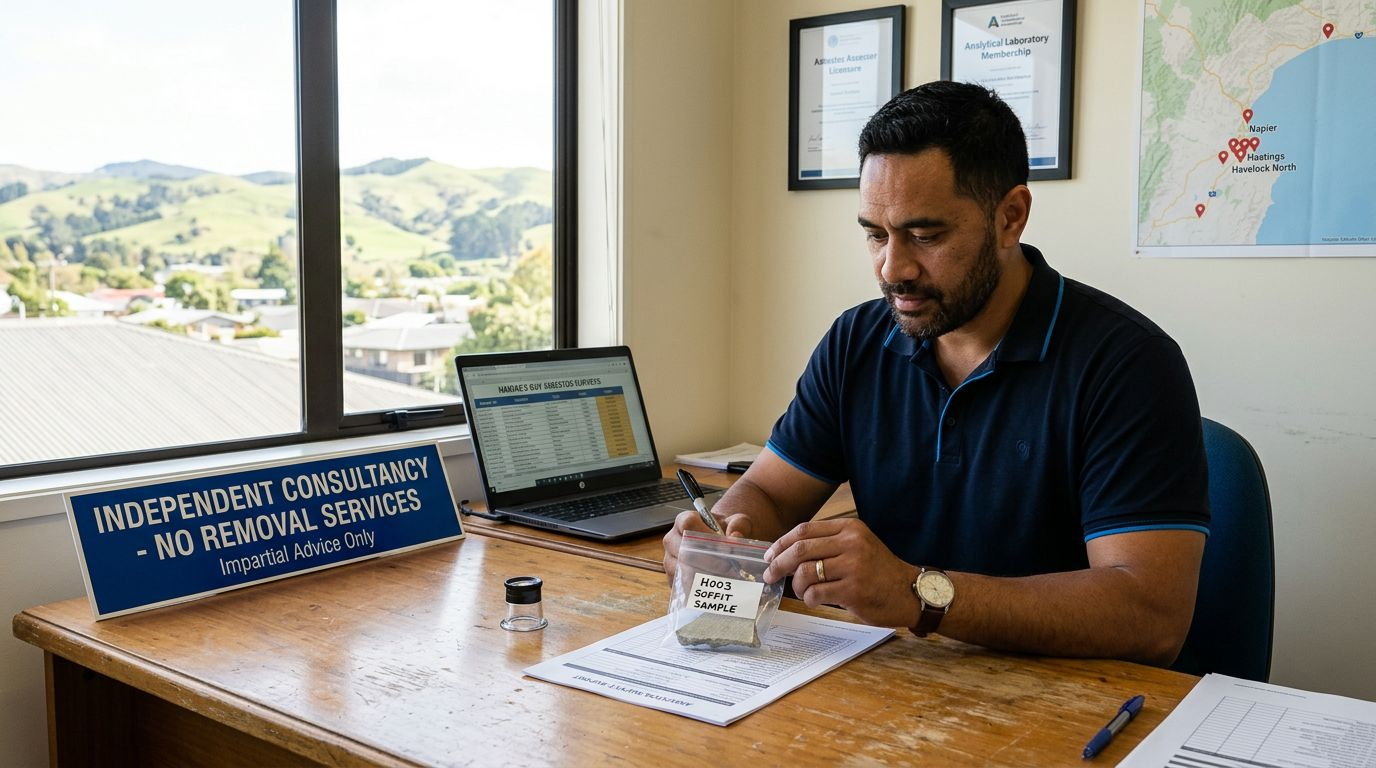
Why Independent Consultancy Matters
When you suspect asbestos in your eaves, you need advice that is focused solely on your safety and compliance. Asbestos Safe Consultancy is entirely independent. We do not perform removal work, which means we have no financial incentive to recommend expensive remediation if it is not required. Our goal is to provide you with an accurate, IANZ-accredited laboratory report and a clear path forward.
We understand the specific building styles found across Hawke’s Bay, Gisborne, Taupō, and the surrounding districts. Whether you are a homeowner, a developer, or a local council manager, we provide plain-English reports that take the guesswork out of property maintenance.
If your property has soffits or eaves that may be disturbed, ensure you are protected. Contact Asbestos Safe Consultancy on 022 460 7184 for independent testing and expert surveys before you start your next project.