
What Does Asbestos Certified Mean? Licensing vs Accreditation in NZ
What Does "Asbestos Certified" Actually Mean? Understanding Licensing and Accreditation in NZ
Key Takeaways
- Certification refers to the specific qualifications and training held by individual professionals, such as the BOHS P402 for surveyors.
- Licensing is the legal permission granted by WorkSafe New Zealand to businesses or individuals to perform asbestos removal or assessment.
- Accreditation, typically through IANZ, confirms that an organisation has the technical systems and quality controls to produce reliable results.
- Independence between the company surveying the site and the company removing the asbestos is a core requirement for high-level compliance.
If you are managing a commercial building in Napier or planning a renovation on a villa in Gisborne, you have likely heard the term "asbestos certified." It sounds reassuring, but in the world of New Zealand health and safety regulations, the term is remarkably vague. Using it as a catch-all often leads to confusion during property transactions or council consent processes.
We see this daily. A property owner might hire a contractor who claims to be "certified," only to find out later that the contractor lacks the specific WorkSafe licence required for the job. Understanding the distinctions between certification, licensing, and accreditation is the only way to ensure your project stays on the right side of the law and, more importantly, keeps people safe.
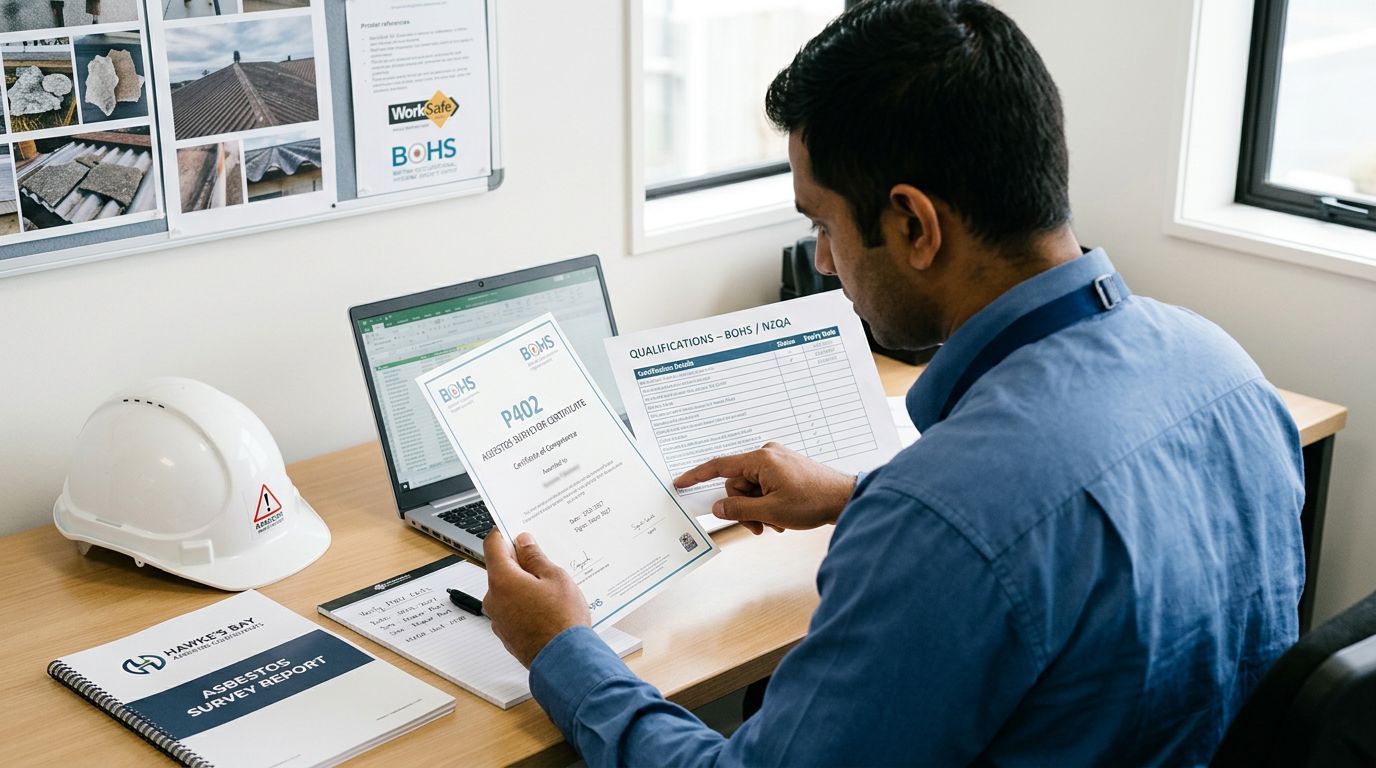
Certification: The Individual’s Proof of Training
Certification focuses on the person doing the work. It is a record of their education and demonstrated skill. In the New Zealand asbestos industry, the most recognised certifications come from the British Occupational Hygiene Society (BOHS). These qualifications provide the theoretical and practical foundation for identifying and managing hazardous materials.
For example, a surveyor should hold the BOHS P402 qualification. This specific certification ensures the individual knows how to identify asbestos-containing materials, how to take bulk samples safely, and how to write a report that actually helps a building manager. When we talk about "certified" professionals, we are usually referring to these types of industry-standard qualifications. You can learn more about how these qualifications fit into the wider industry in our guide on who tests for asbestos in NZ.
Licensing: The Legal Permission to Act
Licensing is a regulatory matter handled by WorkSafe New Zealand. While certification proves a person was trained, a licence is the legal permit that allows a business or individual to perform high-risk work. The Health and Safety at Work (Asbestos) Regulations 2016 mandate specific licences for different types of asbestos work.
WorkSafe issues three primary types of licences:
- Class A Licence: Required for the removal of friable asbestos (materials that can be crumbled by hand pressure, which pose the highest risk).
- Class B Licence: Required for the removal of more than 10 square metres of non-friable asbestos, such as cement roofing or cladding.
- Asbestos Assessor Licence: Required for individuals performing air monitoring and issuing clearance certificates after Class A removal work.
Take a developer in Hastings, for example. If they are gutting an old industrial site with friable pipe lagging, they must hire a Class A licensed removalist. A contractor with only a Class B licence is legally prohibited from touching that material, regardless of how many "certificates" they might have on their wall. You can find a detailed breakdown of these requirements on the WorkSafe licensing overview page.
Accreditation: The Organisational Gold Standard
Accreditation applies to the organisation as a whole rather than a single person. In New Zealand, International Accreditation New Zealand (IANZ) is the authority that grants this status. Accreditation proves that a company operates under a rigorous quality management system, such as ISO/IEC 17020 for inspection bodies or ISO/IEC 17025 for testing laboratories.
When a laboratory is IANZ-accredited for asbestos identification, it means their processes are regularly audited for accuracy and consistency. Similarly, an accredited inspection body must prove that its surveyors are not only trained but also supervised and monitored to maintain high standards. IANZ criteria require personnel to have the BOHS P402 qualification plus at least six months of supervised experience before they are deemed competent.
Choosing an accredited provider ensures the data you receive is legally robust. This is particularly important when you are commissioning asbestos surveys for refurbishment or demolition, where an error in identification can lead to massive delays and unexpected costs.
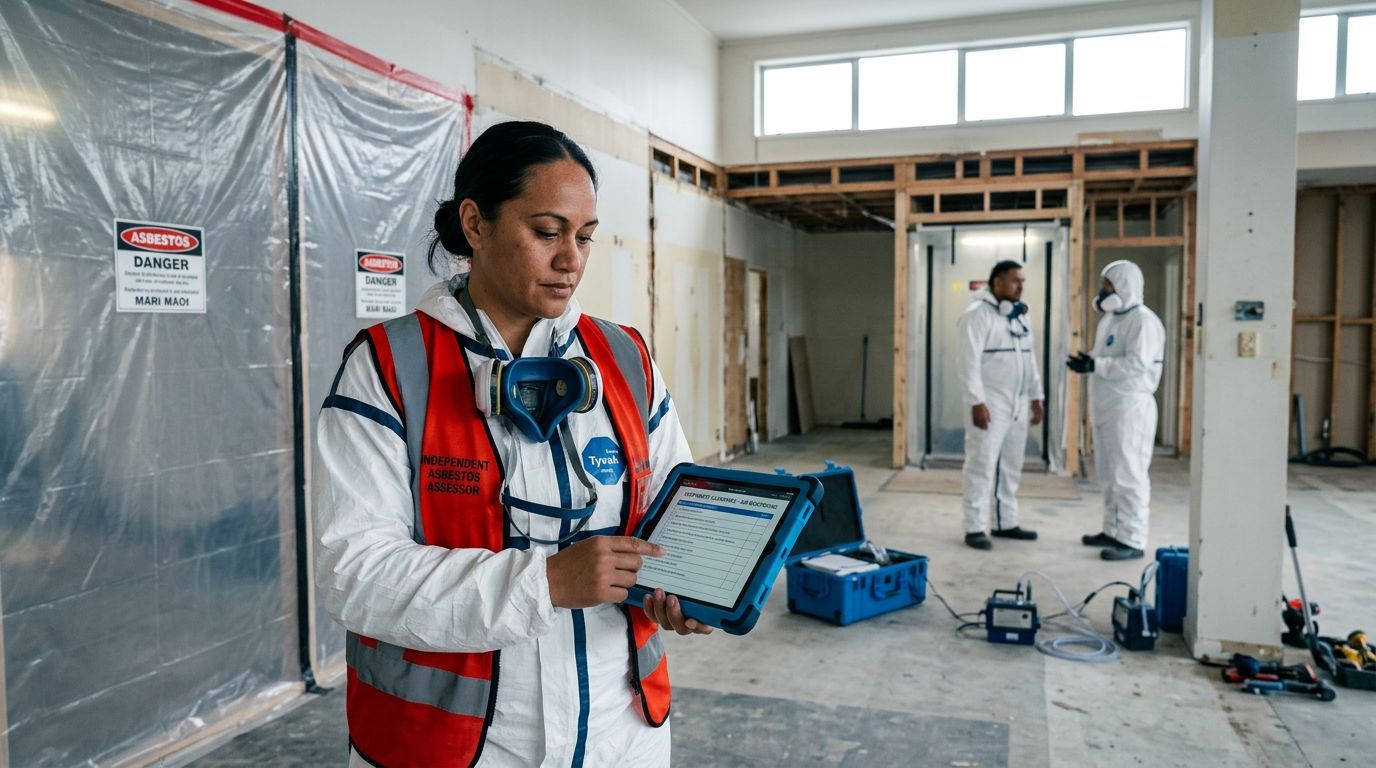
Why Independence is the Missing Piece
The most qualified, licensed, and accredited professional in the country still presents a risk if they have a conflict of interest. New Zealand regulations and IANZ criteria place a heavy emphasis on independence, particularly for air monitoring and clearance inspections. These tasks must be performed by someone who is independent of the company doing the removal work.
We operate as an independent consultancy because it allows us to provide unbiased advice. If a removalist also performs the final clearance inspection, there is a natural incentive to pass the work quickly. An independent assessor has one sole priority: ensuring the site is safe for re-occupation. When vetting a provider, always ask if they have any financial ties to removal contractors. Our independence checklist provides a practical framework for making this choice.
How to Vet Your Asbestos Professional
To cut through the marketing jargon, you should ask four specific questions before signing a contract. These questions apply whether you are a shop owner in Napier or a project manager in Taupo.
First, ask which specific BOHS or NZQA qualifications the staff members hold. Second, verify if the company holds a WorkSafe Class A, Class B, or Assessor licence appropriate for your specific project. Third, confirm if the survey or lab testing is IANZ-accredited. Finally, ask for a written statement confirming their independence from any removal companies involved in the project.
Regulatory compliance protects your liability, but technical competence protects your health. By looking for the right combination of certification, licensing, and accreditation, you ensure that "asbestos certified" actually means something on your property.