
NZ Construction: Don't Let Asbestos Derail Your Project! Essential Safety Guide
Safe from the Start: Managing Asbestos Risks During Construction and Renovation
Key Takeaways
- New Zealand law requires an intrusive refurbishment or demolition survey for any pre-2000 building before structural work begins.
- Asbestos remains the leading cause of work-related death in New Zealand, claiming approximately 220 lives every year.
- A standard management survey is insufficient for construction; you must identify hidden materials through destructive testing.
- Integrating the Asbestos Management Plan (AMP) into your Site-Specific Safety Plan (SSSP) ensures all trades remain compliant and safe.
Every construction project in New Zealand begins with a single priority: keeping the team safe. Whether you are a developer in Napier planning a commercial fit-out or a project manager overseeing a residential subdivision in Gisborne, asbestos is a reality of the local building stock. Buildings constructed or refurbished before 1 January 2000 are presumed to contain asbestos until a competent person proves otherwise.
Managing this risk effectively requires more than a cursory glance at an old file. It demands a proactive approach that starts well before the first hammer swings. By securing a refurbishment and demolition asbestos survey, you fulfill your legal obligations and protect the health of every person who sets foot on your site.
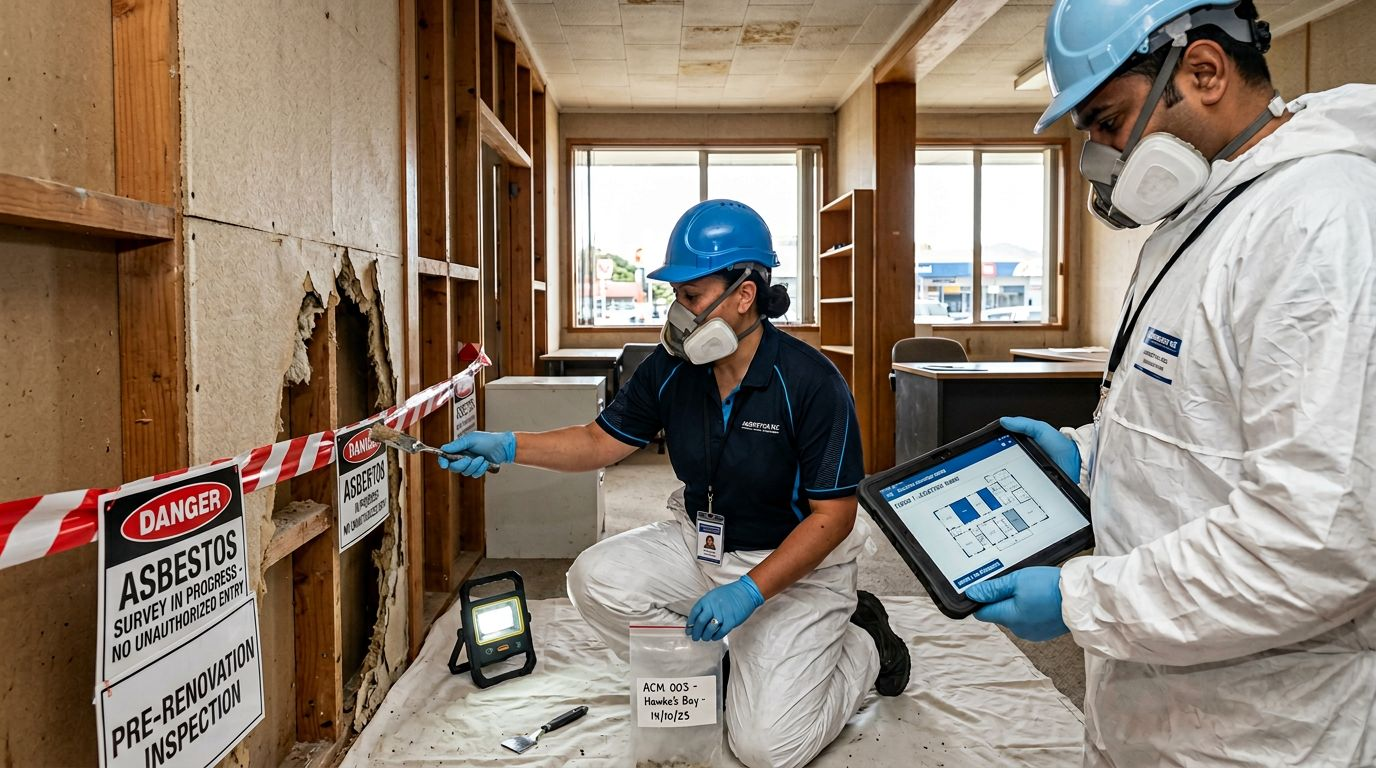
The Legal Mandate for Pre-2000 Buildings
The Health and Safety at Work (Asbestos) Regulations 2016 place a clear duty on businesses to identify and manage asbestos. If you are a Person Conducting a Business or Undertaking (PCBU), you share the responsibility for ensuring that asbestos-containing materials (ACMs) are identified before any demolition or refurbishment work takes place. This duty applies to developers, building owners, and main contractors alike.
Legal compliance requires a thorough, intrusive inspection. The law assumes asbestos is present in any structure built before the year 2000. Relying on assumptions or incomplete data can lead to significant legal exposure and project delays. Current regulations mandate that friable asbestos and non-friable asbestos greater than 10 square metres must only be removed by a licensed professional. Starting with a clear understanding of the site's condition is the only way to ensure these thresholds are managed correctly.
Why Management Surveys Are Insufficient for Renovation
A management survey serves as the foundation for day-to-day building occupancy. It identifies ACMs that might be disturbed during normal maintenance. However, a management survey is non-destructive by design. It focuses on surface-level materials and visible areas.
Construction work is inherently invasive. A refurbishment and demolition asbestos survey is a fully intrusive, often destructive process. It targets the specific areas of the building that will be disturbed, looking behind walls, under floorboards, and inside service ducts. This level of detail is necessary because asbestos was often used in hidden applications, such as internal insulation or as a lining behind newer materials. Identifying these hidden risks before work starts prevents accidental exposure and the costly decontamination processes that follow a "find" mid-project.
Integrating the Asbestos Register into Site Safety
Once the survey is complete, the findings must become a live part of your site management. An Asbestos Management Plan (AMP) is a legal requirement wherever asbestos is likely to be present. This document should sit at the heart of your Site-Specific Safety Plan (SSSP).
Effective integration involves several practical steps:
- Marking known ACMs clearly on site drawings and physical locations.
- Including asbestos controls in Task Plans and Job Safety Analyses (JSAs).
- Coordinating trade sequencing to ensure asbestos removal happens before other trades enter an area.
- Establishing permit-to-work controls for any activity near identified asbestos.
WorkSafe provides an example AMP template that outlines how to record locations, conditions, and emergency procedures. Using this framework ensures your site remains compliant with the latest New Zealand standards.
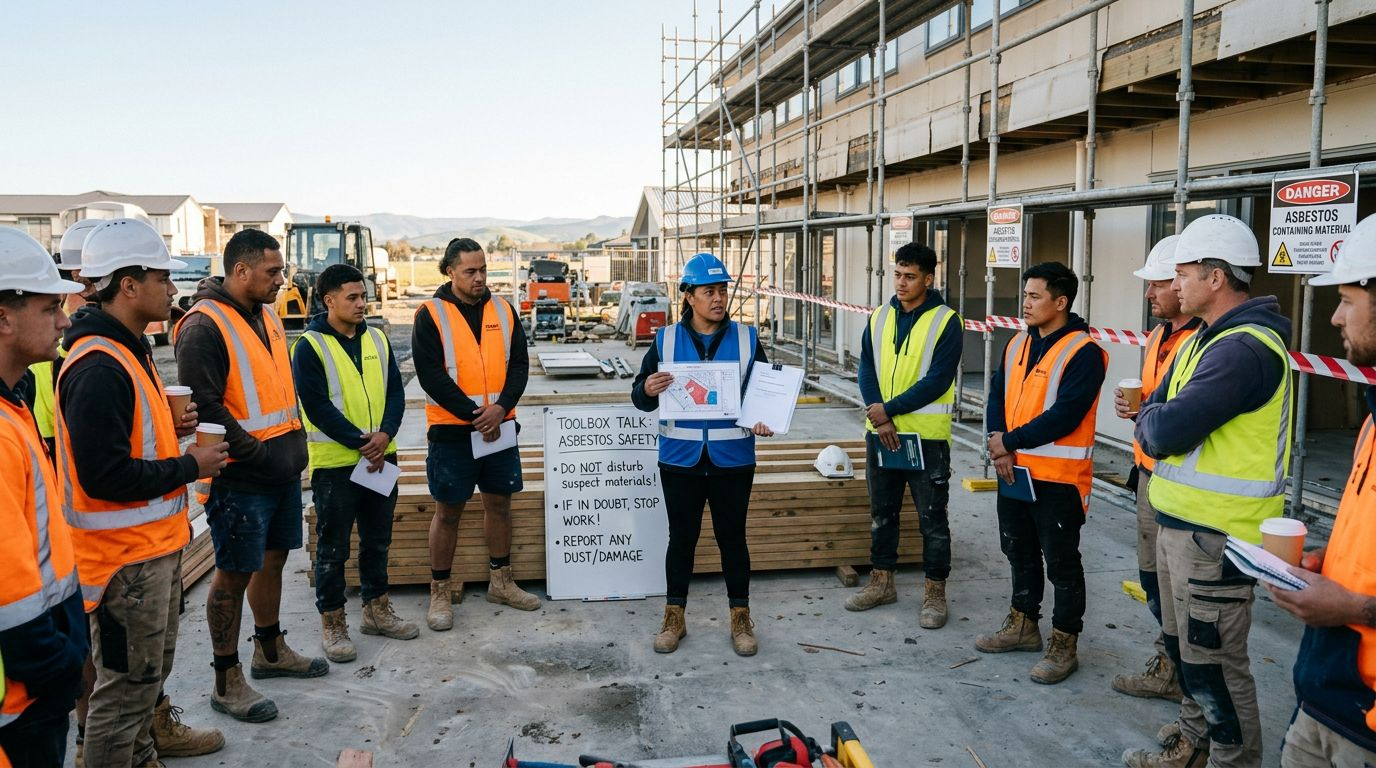
Toolbox Talks and Worker Engagement
Communication is the most effective tool for preventing exposure. Every worker on site must understand where asbestos is located and what to do if they encounter something unexpected. Asbestos remains the leading cause of work-related death in New Zealand, with 220 people dying from asbestos-related disease each year. This statistic highlights why toolbox talks are a vital safety measure rather than a formality.
During these briefings, focus on common ACM locations relevant to New Zealand sites, such as fibre-cement cladding, textured ceilings, and soffits. Ensure every sub-contractor knows that cutting, drilling, or sanding suspect materials is prohibited without prior authorisation. Workers have a legal right to stop work if they believe they are at risk, and your site culture should empower them to exercise that right.
Procedures for Unexpected Discoveries
Even with a comprehensive survey, the nature of older buildings means unexpected materials can occasionally appear. Having a clear "if in doubt, stop work" procedure is essential. If a worker discovers a material they suspect contains asbestos, they must immediately cease work and isolate the area. Access must be prevented until a competent surveyor can assess the material.
Once a discovery is made, the PCBU must notify the supervisor and engage a specialist to test the material. If the results are positive, the asbestos register and AMP must be updated. Work can only resume once the risks are managed or the material is removed by a licensed professional. This structured approach prevents a minor discovery from turning into a major health incident.
The Importance of Independent Advice
Choosing an independent asbestos consultancy ensures you receive unbiased advice focused solely on safety and compliance. WorkSafe's Good Practice Guide for Asbestos Surveys emphasises the importance of using competent, qualified surveyors who operate to current industry standards. Independent consultants provide a clear separation between the survey process and the removal work, eliminating potential conflicts of interest.
The regulatory landscape in New Zealand continues to evolve. WorkSafe recently updated its guidance suite, introducing new expectations for surface testing, exposure monitoring, and four-stage clearance procedures. Relying on specialists who stay current with these changes protects your business from the risks of non-compliance and ensures your project moves forward with confidence.
For more detailed information on the differences between survey types, you can read our asbestos demolition and refurbishment surveys NZ guide. Taking the time to plan for asbestos today prevents the health risks and financial penalties of tomorrow.