
Asbestos Management Plan Review: What to Include and When to Update
Key Takeaways
- WorkSafe requires a written asbestos management plan for any workplace where asbestos is identified or likely to be present.
- The plan must be site-specific and include a register, risk management decisions, and emergency procedures.
- Statutory reviews must occur at least every five years, with immediate updates required if asbestos is disturbed or removed.
- Accessibility is mandatory: workers, contractors, and inspectors must be able to view the plan easily.
- Independent consultancy ensures unbiased management advice, separating the assessment process from the removal profit motive.
Managing a commercial property or a large-scale development in Hawke’s Bay requires a clear grasp of health and safety obligations. If your building was constructed or refurbished before January 2000, the law assumes asbestos is present until proven otherwise. This reality places a specific duty on the Person Conducting a Business or Undertaking (PCBU) to maintain a compliant asbestos management plan (AMP).
We see many property managers and business owners treat the AMP as a "set and forget" folder. In reality, the Health and Safety at Work (Asbestos) Regulations 2016 define this as a living document. It serves as the primary tool for keeping people safe from the estimated 220 deaths caused by asbestos exposure in New Zealand each year. Keeping this document current is a legal necessity and a practical safety requirement.
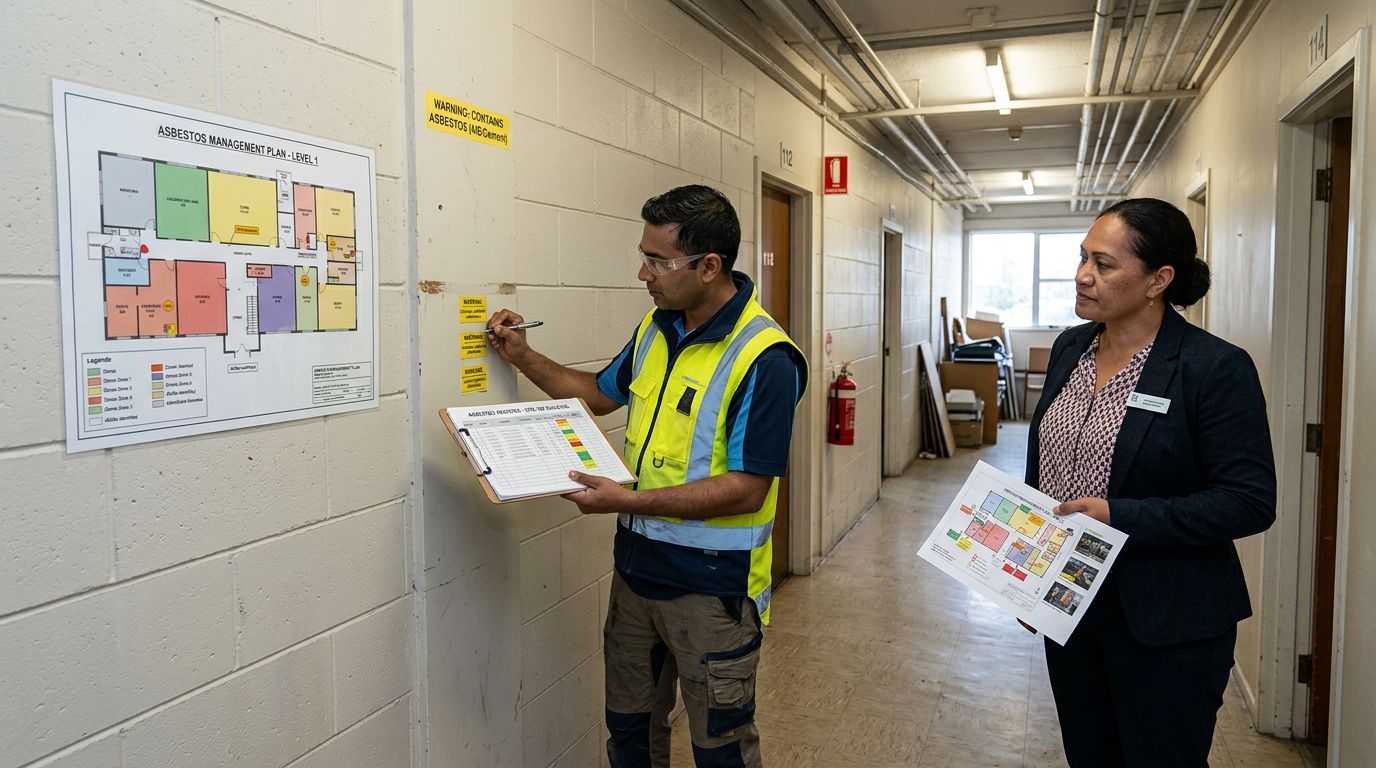
What Must Be Included in Your Management Plan?
A compliant plan provides a roadmap for anyone working on your site. WorkSafe is explicit about what must be documented in writing. A generic template often fails this test because it lacks the specific nuances of your building’s layout and risk profile.
The Asbestos Register
The foundation of every plan is the asbestos register. This section identifies the location, type, and condition of all known or assumed asbestos-containing materials (ACMs). We recommend including clear site plans, labels, and photographs to ensure there is no ambiguity for a tradesperson about to drill into a wall.
Management Decisions and Justifications
Your plan must state how you intend to manage the risks. This includes the reasons behind your choices. You might decide to encapsulate a textured ceiling that is in good condition rather than removing it immediately. The plan must document this decision and the rationale behind it.
Emergency and Incident Procedures
Accidents happen. If a pipe bursts and damages asbestos lagging, or if a contractor accidentally disturbs an AC sheet, the plan must outline the immediate steps to contain the area and notify the relevant authorities. Having these procedures pre-written prevents panic and limits exposure during a crisis.
Worker Information and Training
The document must list the roles and responsibilities of people who work near the asbestos. It should detail the training they have received and any health monitoring arrangements in place. This ensures that everyone from the site manager to the cleaning staff understands their part in maintaining a safe environment.
For more detail on how these components fit together, you can read our guide on Asbestos Management Plan NZ: Your Business's Legal Must-Have.
The Five-Year Rule and Other Review Triggers
The WorkSafe guidance states that an asbestos management plan review must occur at least every five years. This is the maximum interval allowed. However, several common scenarios trigger an immediate update regardless of the calendar.
You must review and update your plan when:
- Asbestos is removed, disturbed, sealed, or enclosed.
- New asbestos is identified during a refurbishment survey or maintenance.
- Control measures are reviewed or found to be ineffective.
- The plan is no longer adequate due to changes in building use or layout.
- A health and safety representative or worker requests a review based on a perceived risk.
Take a commercial landlord in Napier managing a retail block built in the 1970s. If a tenant moves out and a new fit-out begins, the existing management plan likely becomes outdated the moment the first wall is opened. Waiting for a five-year anniversary to update the records creates a significant compliance gap. Proactive updates ensure that the register reflects the current state of the building.
Maintaining these records is a core part of being a responsible PCBU. You can find more information on our service page regarding Compliant Asbestos Management Plans in Hawke's Bay.
Accessibility: The "Readily Available" Requirement
A plan locked in a safe or saved on a single manager's laptop does not meet the legal standard. WorkSafe requires that the AMP is readily accessible to any worker or contractor performing work at the site. It must also be available to health and safety inspectors upon request.
In practice, this means having digital or physical copies available at the point of entry or within the site office. If a plumber arrives at a Christchurch office block to repair an internal leak, they should be able to check the AMP before they start. If they cannot access the plan, the PCBU is failing their duty to provide a safe workplace.
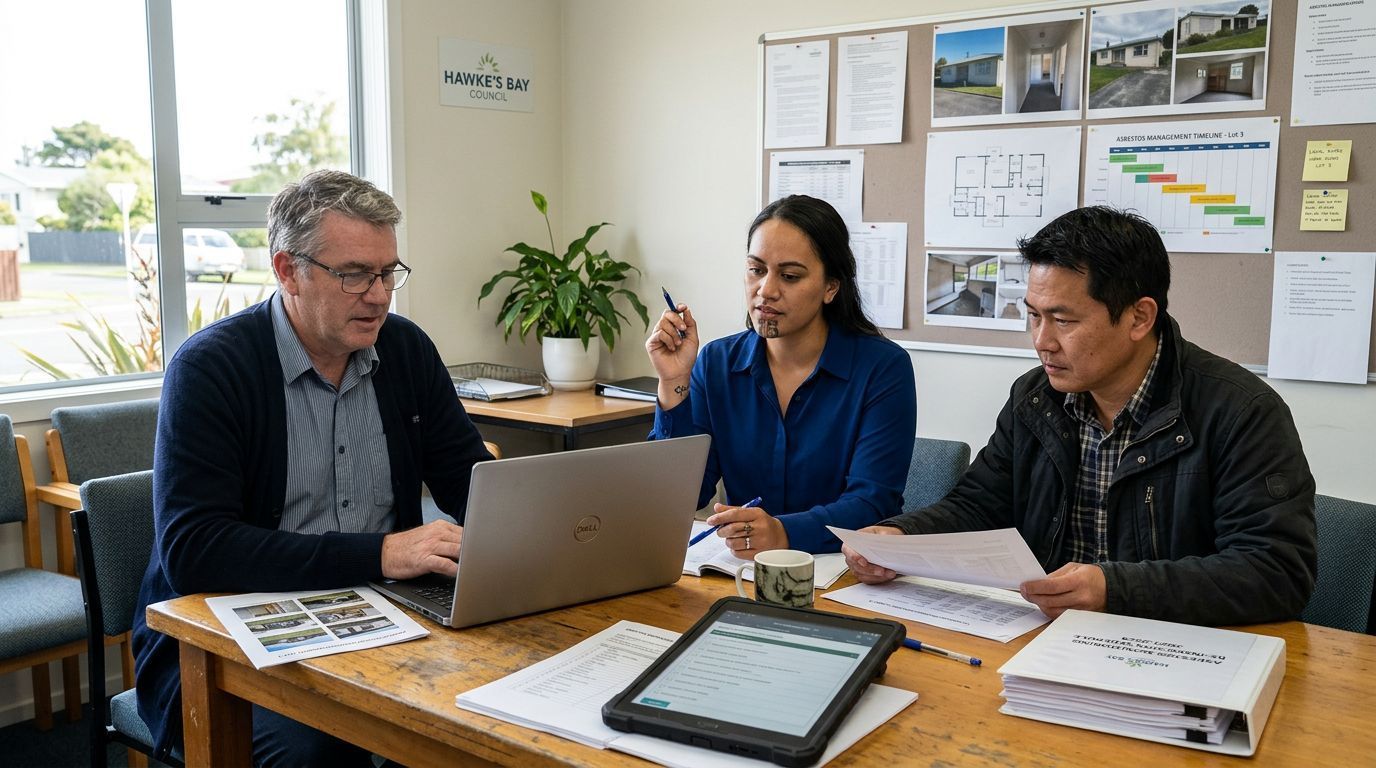
The Importance of Independent Monitoring
Regularly inspecting the condition of known asbestos is a mandatory part of risk management. Over time, materials like vinyl floor tiles or cement roofing can degrade due to wear, weather, or moisture. Monitoring ensures that encapsulation or sealing remains effective.
We advocate for the use of independent consultants for these reviews. Because we do not perform asbestos removal, our assessments remain completely unbiased. Our focus rests solely on what is reasonably practicable to keep your occupants safe, whether that involves continued monitoring or planned removal. This separation of duties protects property owners from unnecessary costs while ensuring high safety standards.
To understand why the AMP is considered a "live" document, view our detailed breakdown on Creating and Maintaining a Compliant Asbestos Management Plan.
Next Steps for Property Owners and Managers
If you are responsible for a property in Hawke’s Bay, Gisborne, Taupō, or Manawatū, follow these steps to ensure your compliance is up to date.
First, verify that you have a current asbestos register. If you do not have one, or if it was completed more than five years ago, commission a management survey. Second, use that data to develop or update your written management plan. Ensure it includes the mandatory sections regarding emergency procedures and worker training.
Third, establish a clear schedule for re-inspections. This allows you to catch deterioration before it becomes a health hazard. Finally, ensure the plan is accessible to everyone who needs it. We provide plain-English reporting and expert reviews across the central North Island to help you meet these obligations with confidence.
Whether you manage a local council building in Tararua or a warehouse in Gisborne, our team provides the independent oversight required to keep your site compliant and your people safe.